A website that brings doctors in
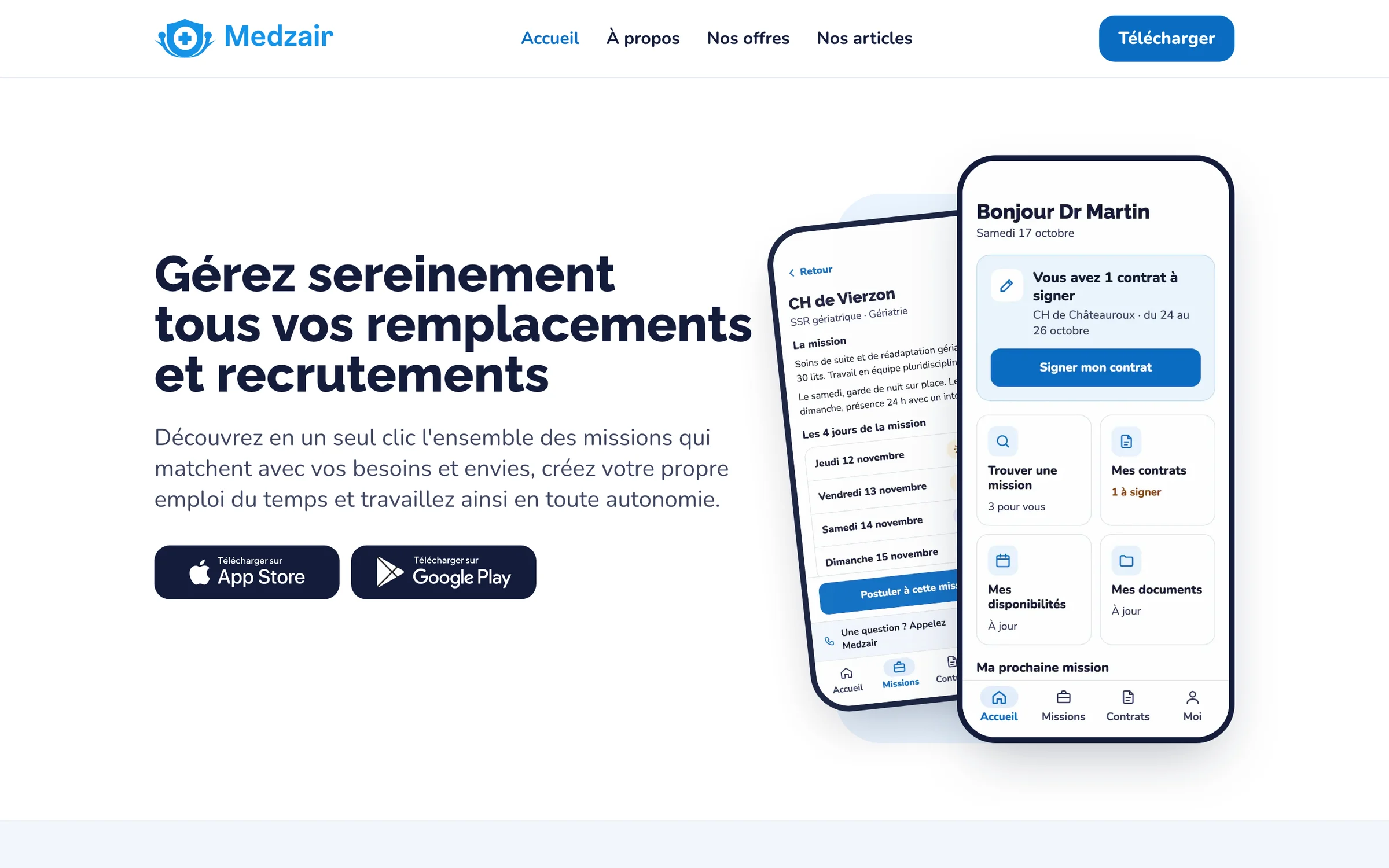
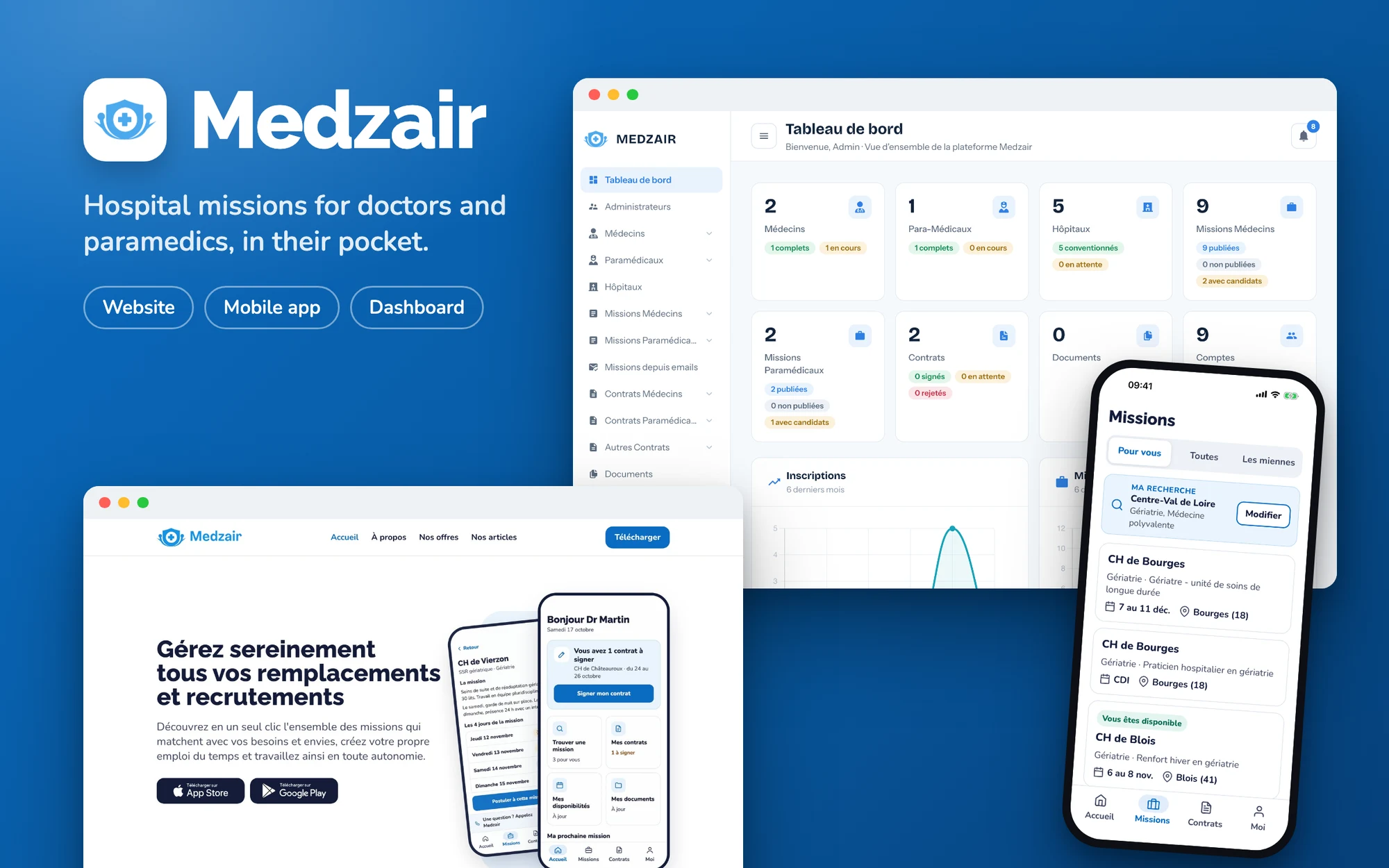
The public site explains how Medzair works, lists open missions and sends doctors to the App Store or Google Play in one tap.
01 / Healthcare staffing · France
Hospitals need cover at short notice. Doctors want missions that fit their lives. Medzair connects the two and handles everything in between.
01 / The context
French hospitals run short of staff and need cover fast: a night next week, a 24-hour on-call this weekend. They send these needs to Medzair by email, often as long forwarded lists.
Before the platform, every request was handled by hand. Someone re-typed the email, phoned doctors to find who was free, collected their documents, then chased signatures from both the doctor and the hospital. The team's capacity was capped by how fast they could type and call.
Medzair's bet was simple: if the busywork disappears, a small team can place far more doctors, and doctors get missions without the paperwork.
02 / The people
Doctors and paramedics
Find missions near them that fit their specialty and schedule, apply in one tap and sign without printing anything, in an app that's clear from the first use.
Hospitals
Post a need, judge candidates and sign the contract fast, without learning yet another tool or creating an account.
The Medzair team
Turn requests into missions, match the right people, check documents and keep every contract moving, without drowning in admin.
03 / The goal
04 / My part
I'm the only engineer on Medzair. I designed the screens and built every part of the product: the API and database, the admin and hospital dashboard, the mobile app and the public website.
05 / The approach
Map the workflow
Follow a mission from the hospital's email to the signed contract, and mark every step where someone types, calls or waits.
One shared platform
Build one API and one database behind the app, the dashboard and the website, so a mission, a document or a contract is the same everywhere.
AI drafts, people decide
Let AI do the repetitive reading and writing, and always show the result to a person before it goes live.
Design for clarity
Set design rules so every screen is obvious at first glance, then rebuild the app around them.
Ship and launch
Release the new app on the App Store and Google Play, and announce it to doctors and hospitals.
06 / Key features
The public site explains how Medzair works, lists open missions and sends doctors to the App Store or Google Play in one tap.
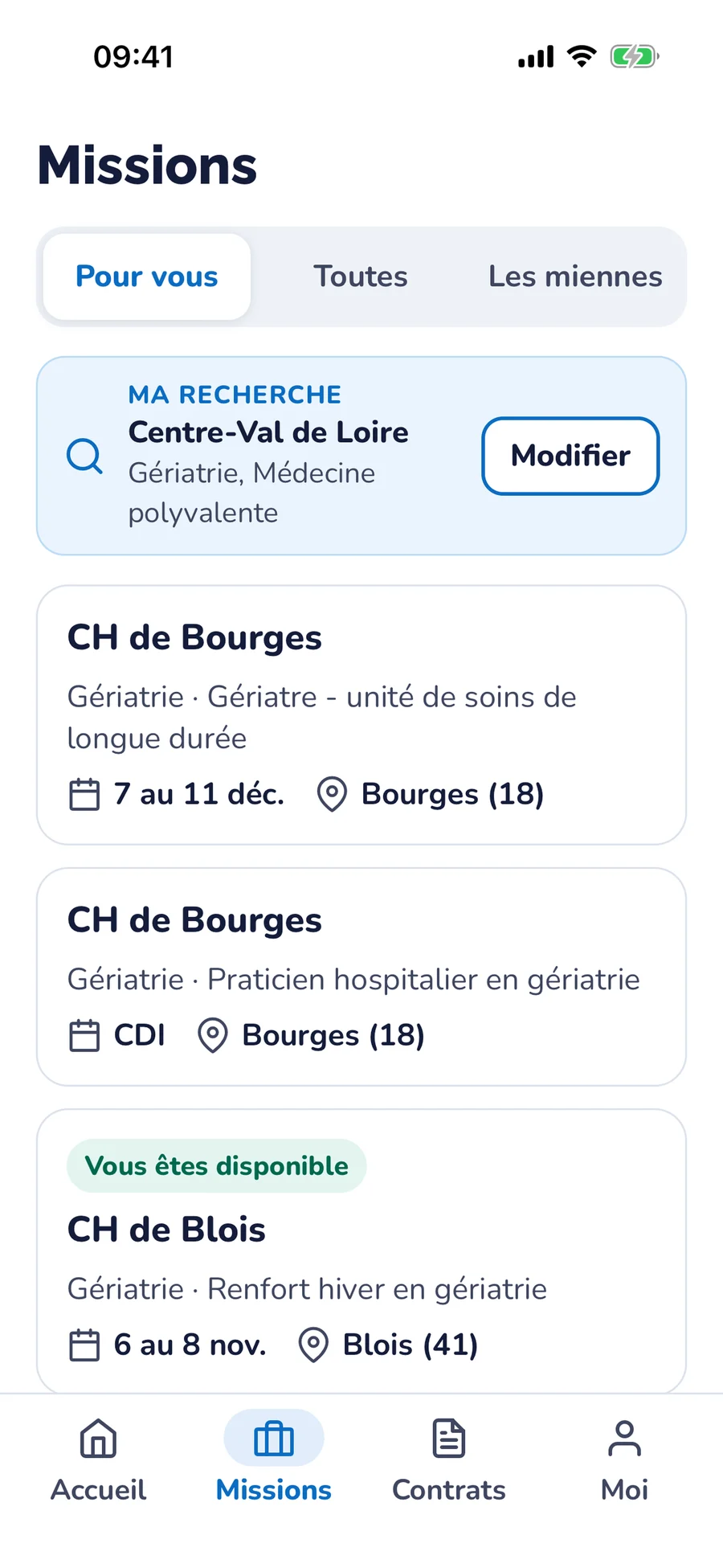
The home screen opens on what needs doing. Missions are matched to each doctor's region and specialty, with dates and shifts in plain words, and applying takes one button.
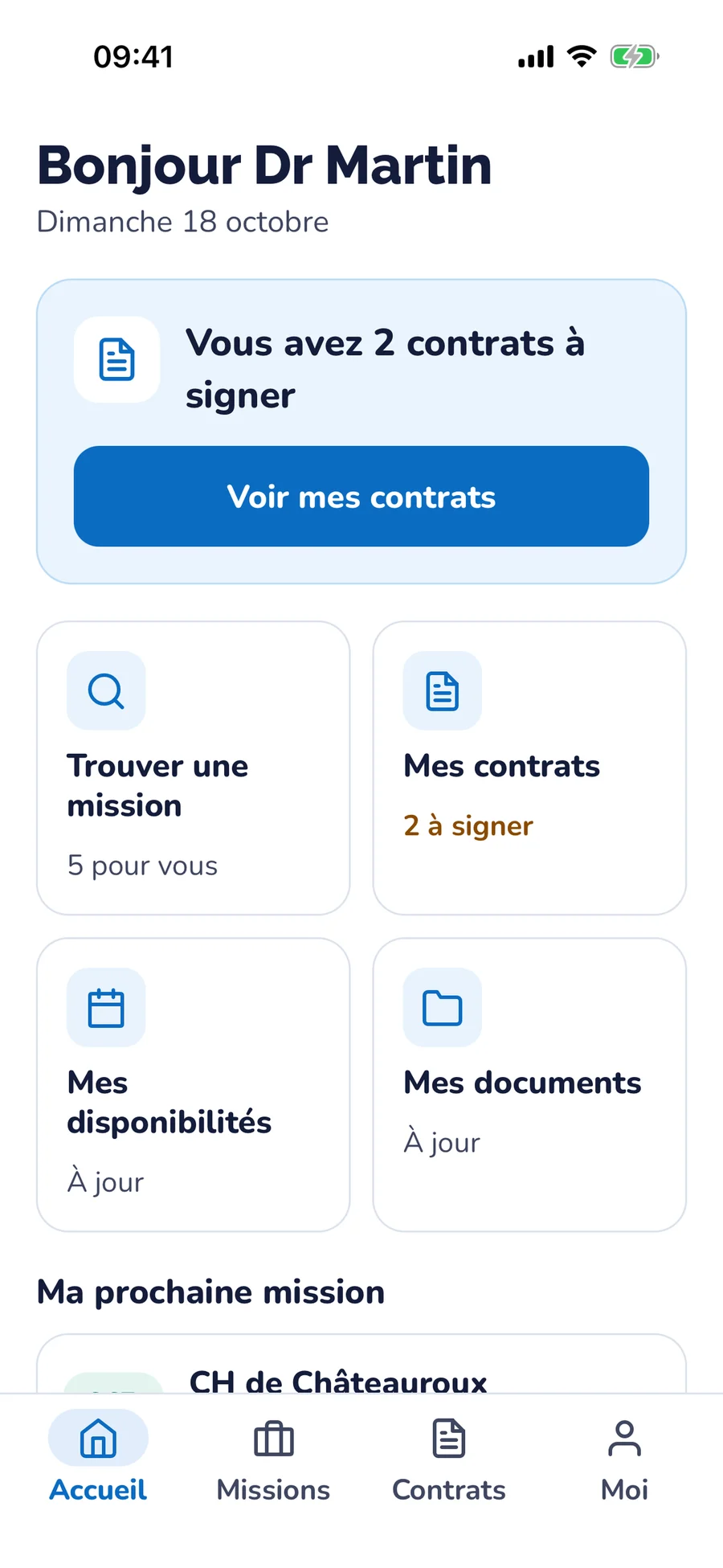
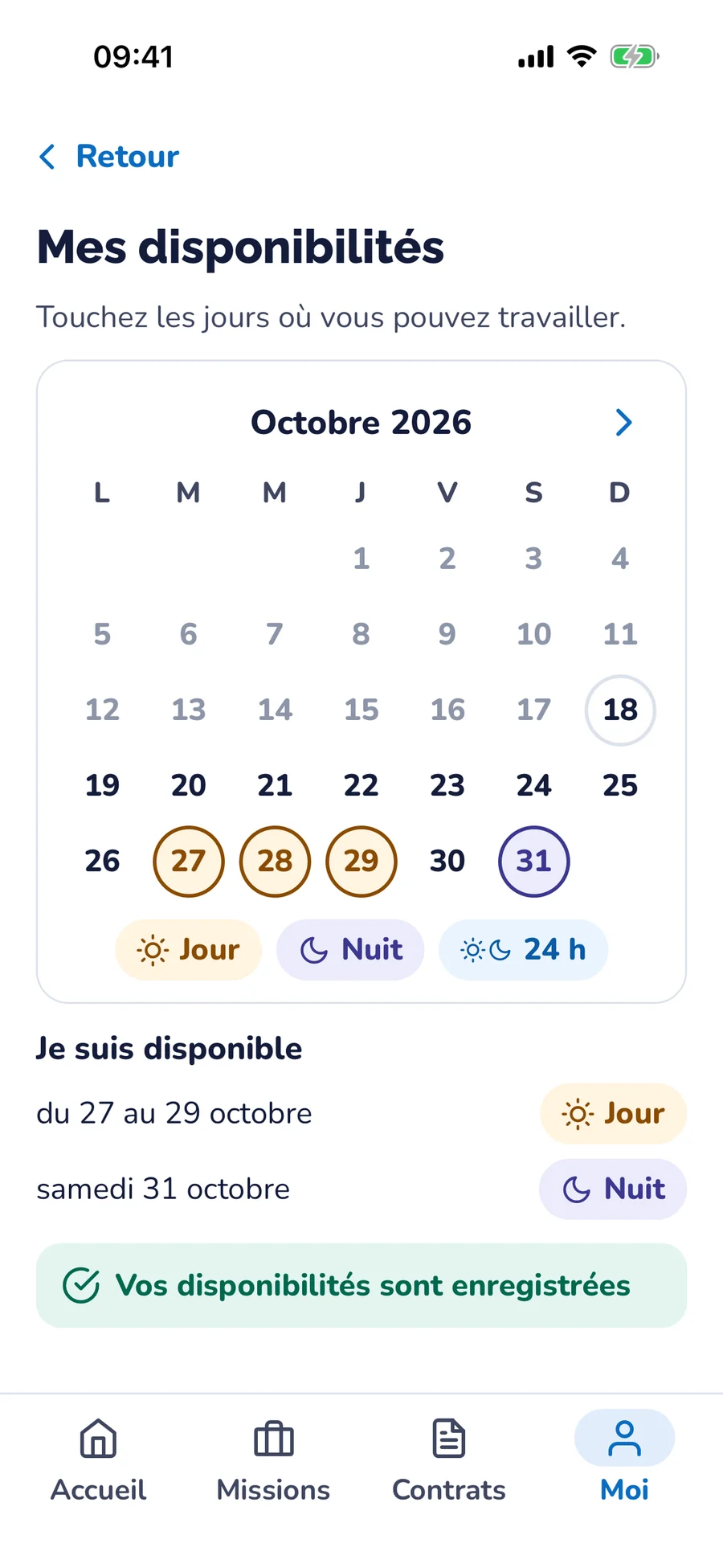
Doctors tap the days they're free, by day, night or 24 hours. The team sees, for each date, which missions fit that person and can place them from their profile.
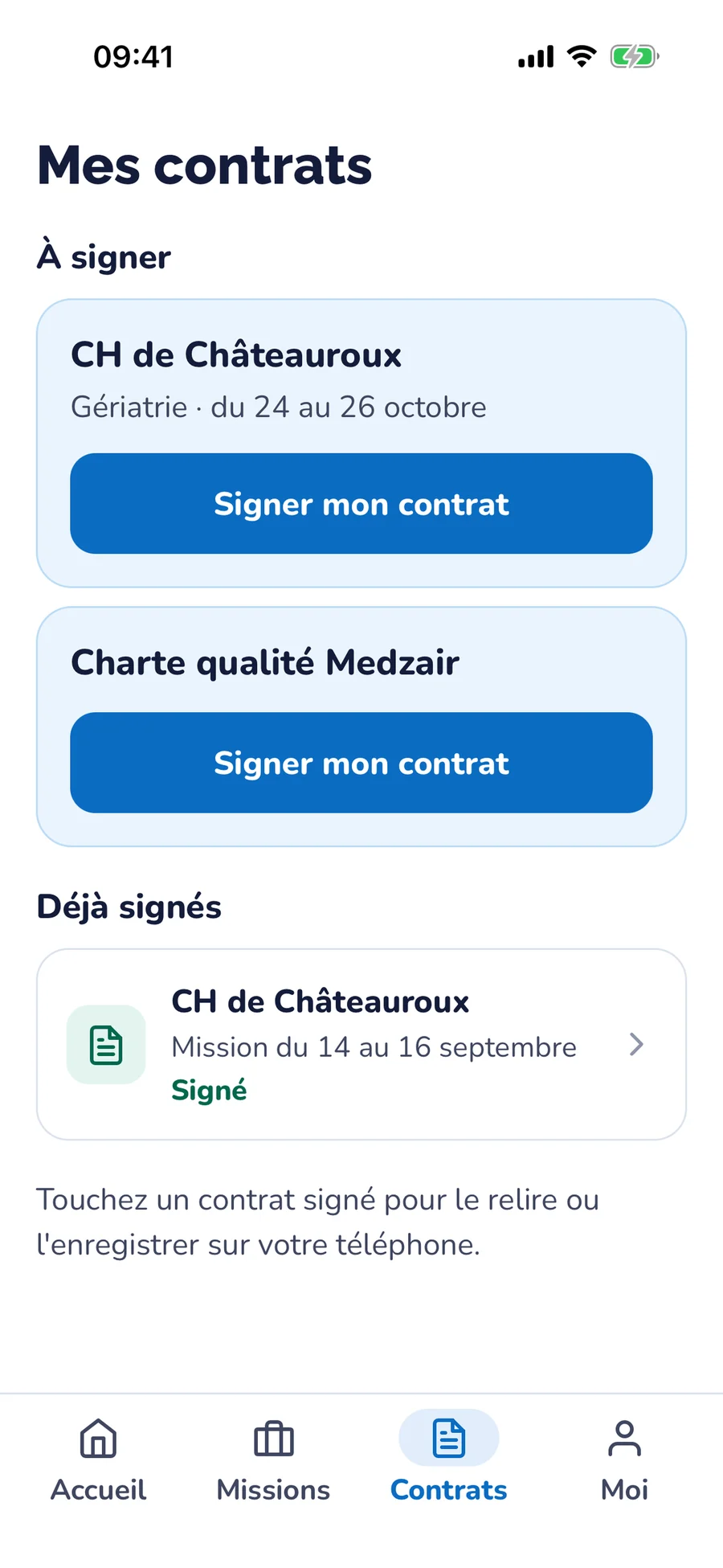
Doctors sign in the app with a saved signature. Hospitals get a secure link by email, upload their signed copy without creating an account, and the team approves it.
Hospitals forward their needs to one mailbox. AI turns each request into a draft mission, and nothing goes live until someone on the team accepts it.
Hospitals follow their missions, applications and contracts in one place. They review anonymous candidate profiles, with diploma, experience and skills but no name, before they decide.
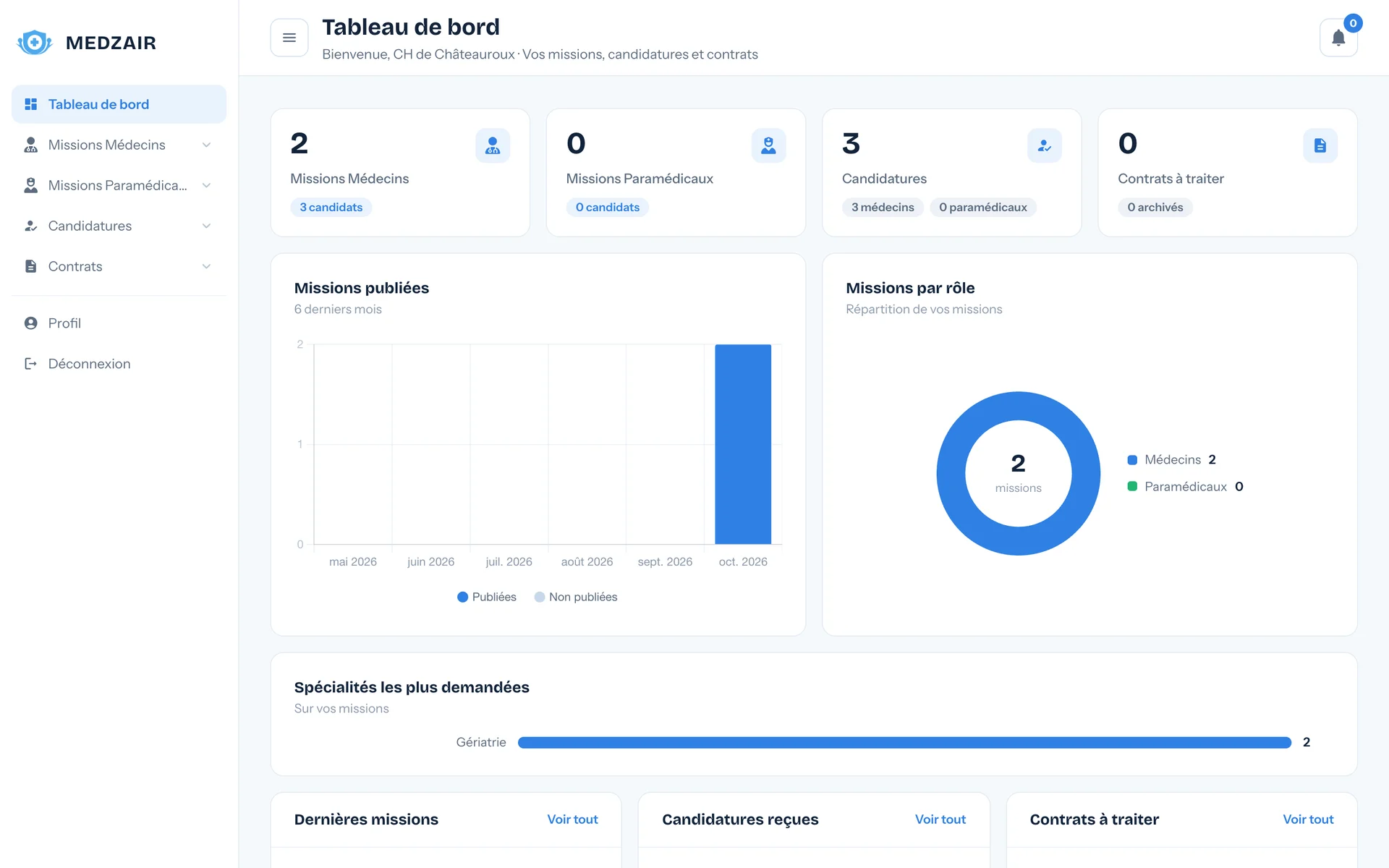
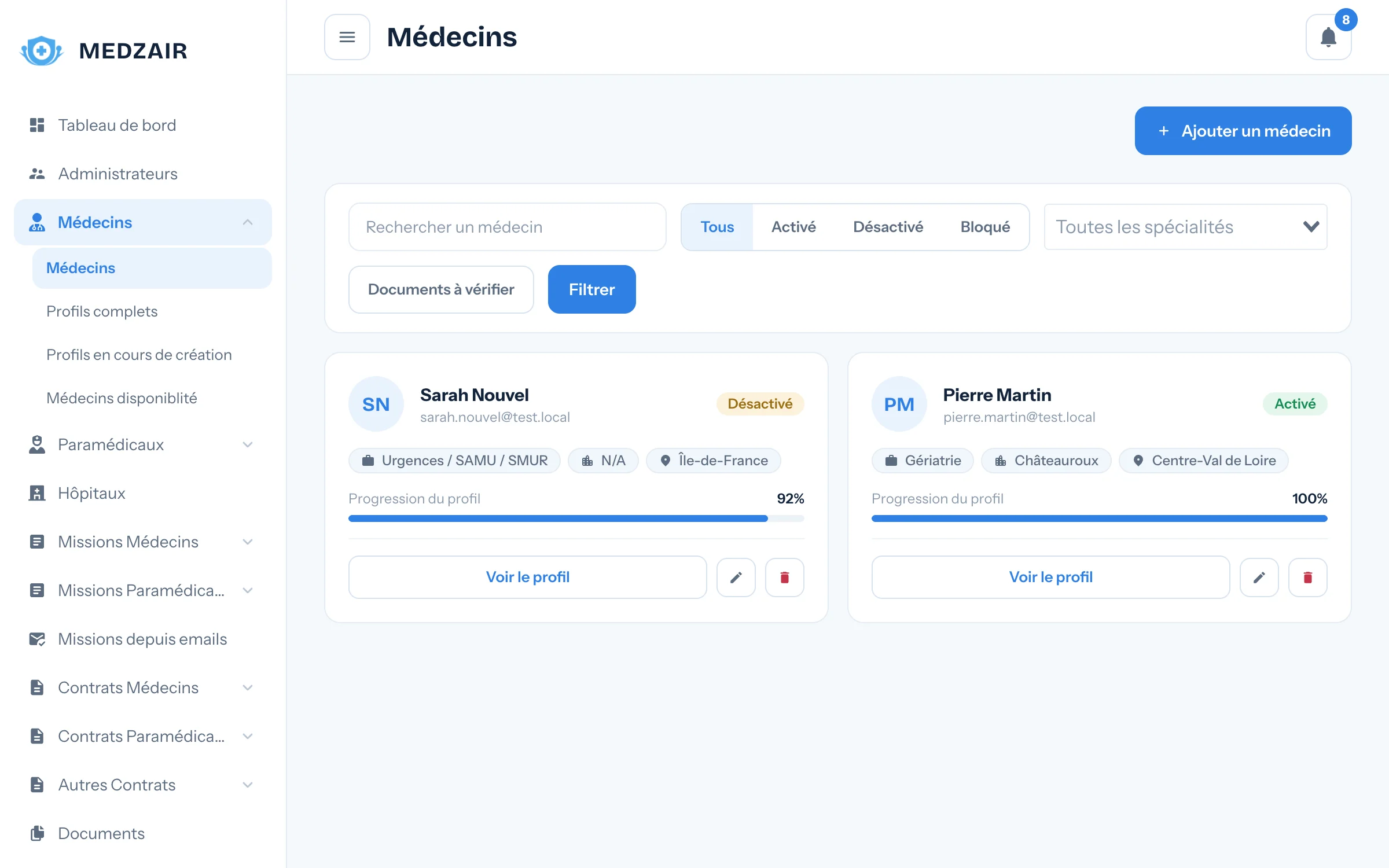
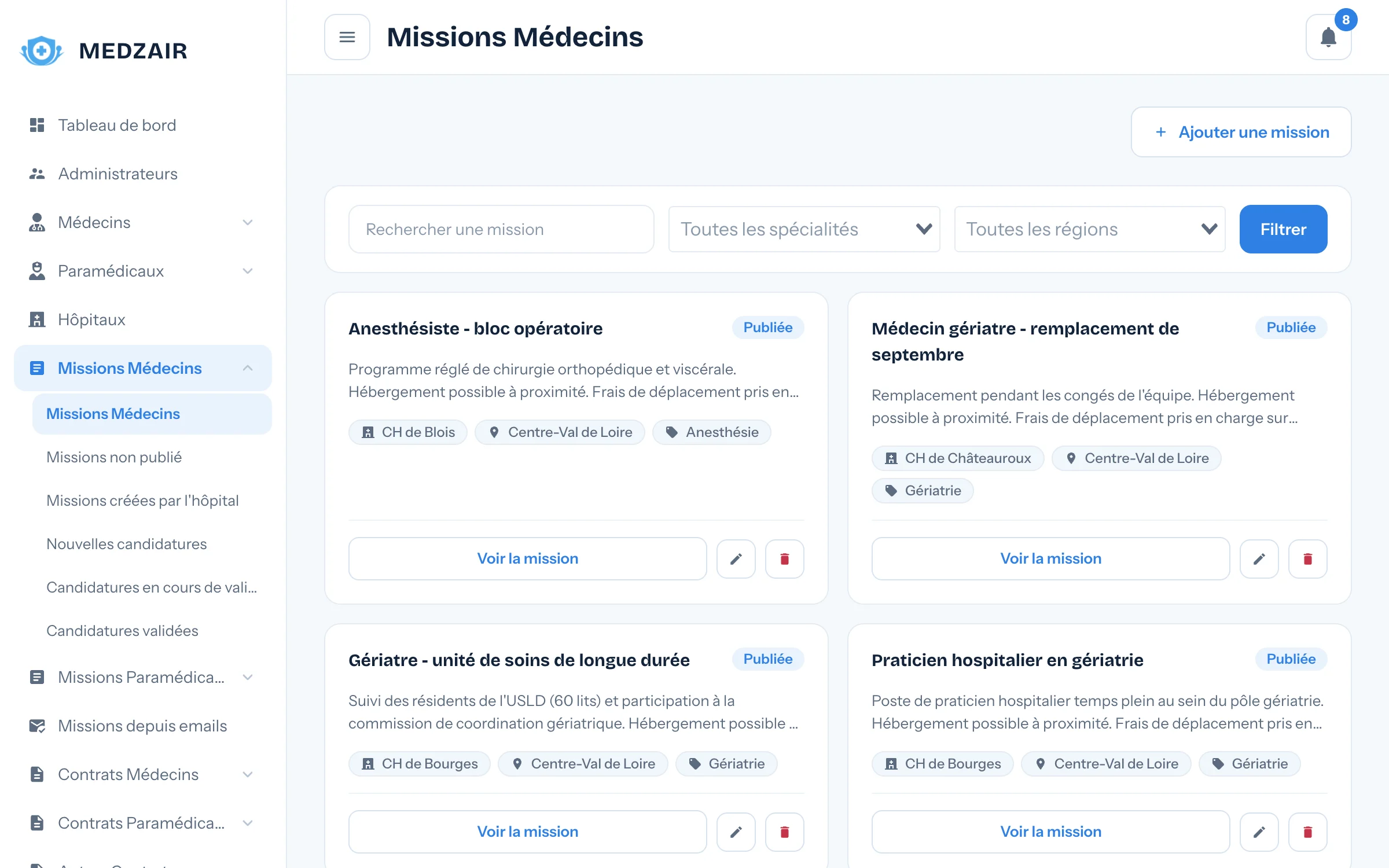
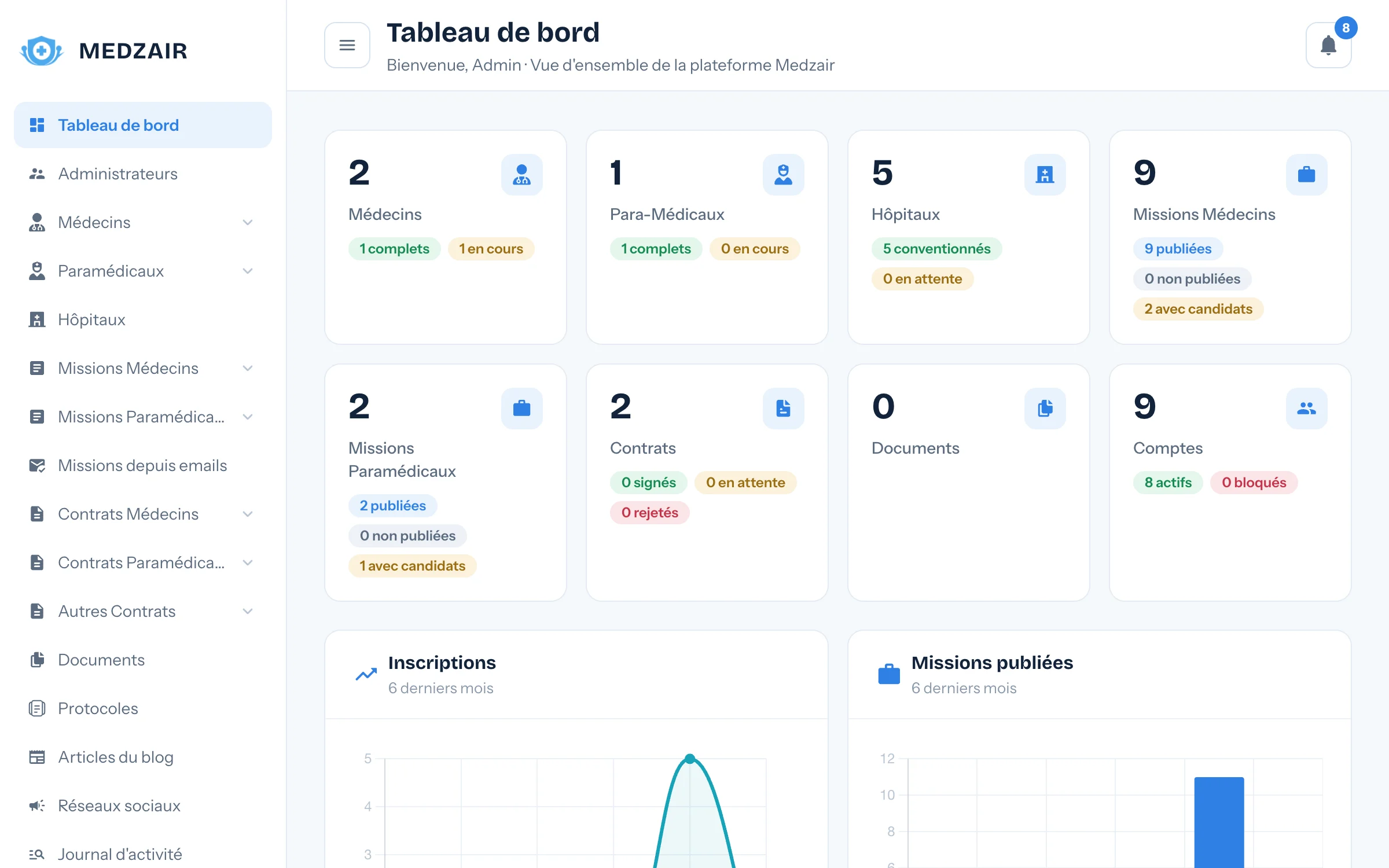
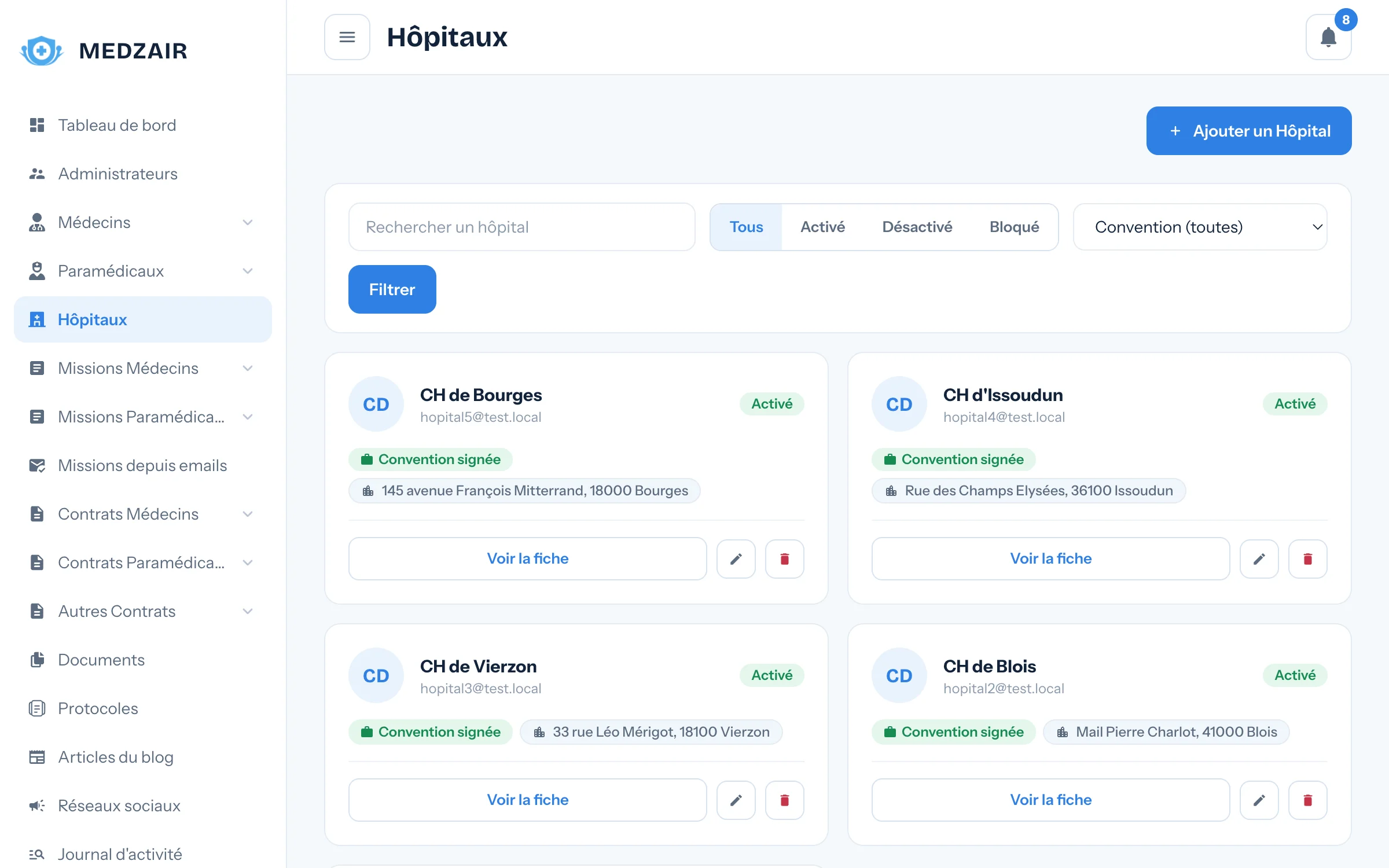
The team manages doctors, paramedics, hospitals, missions and contracts from one dashboard, with an activity log of every action.
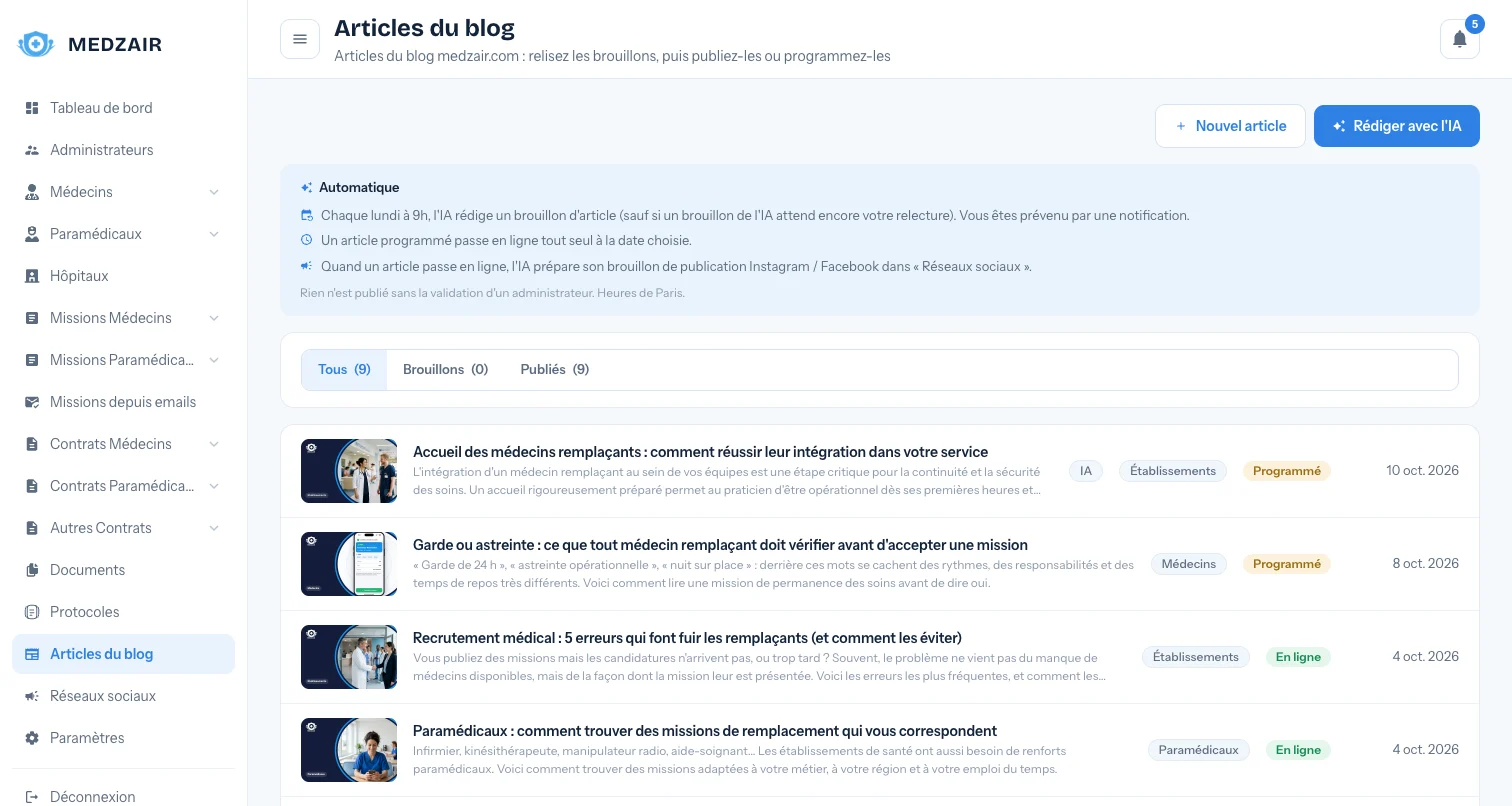
Each week AI drafts a blog article for the team to review. When an article goes live, social posts for Instagram, Facebook and LinkedIn are drafted and published on schedule.
07 / Key decisions
The challenge
Every mission started as an email someone had to read and re-type. One email could cover several hospitals and a dozen dates, or quietly update a list sent the week before.
What I did
Hospitals keep sending emails, because that's what they already do. Every morning the platform reads the mailbox and turns each request into a draft mission, or an update to an existing one.
I chose drafts over automatic publishing: an admin checks each one and accepts it with a click.
What it changed
The team reviews missions instead of typing them, and hospitals didn't have to change a thing.
The challenge
Hospitals want to judge a candidate's experience before saying yes. But Medzair can't reveal who the candidate is until they're placed, and hospitals won't create accounts just to sign a contract.
What I did
Hospitals see an anonymous profile: diploma, years of practice, services, skills and languages. Anything that could identify them is blocked automatically.
To sign, the hospital gets a secure link by email: download the contract, upload the signed copy, done.
What it changed
Hospitals can decide and sign from a single email, and candidates stay protected until the deal is made.
The challenge
Medzair's doctors range from recent graduates to experienced practitioners who don't spend their day on a phone. In the first version of the app, the important actions were too easy to miss.
What I did
I set simple design rules so anyone can find their way on the first try: clear labels, one obvious action per screen, large readable text and a confirmation after every step.
I compared several design directions, picked the clearest one and rebuilt the app screen by screen.
What it changed
Doctors find what they need at first glance, whatever their comfort with technology.
08 / The result
For the Medzair team
Missions arrive as drafts to approve, not emails to re-type. Documents, contracts and ratings live in one dashboard.
For hospitals
They post needs the way they always did, judge anonymous candidates and sign from a link, with no account to create.
For doctors and paramedics
Missions matched to their region and specialty, one tap to apply and contracts signed on the phone, in an app that's clear at first glance.
For the business
Paramedics now use the platform alongside doctors, and the website was rebuilt so every mission can be found on Google.
Built with
How I work
Built with an AI-agent workflow I designed: one branch per change, Claude Code as a pair programmer, and every change reviewed and merged through a pull request.
Case studies
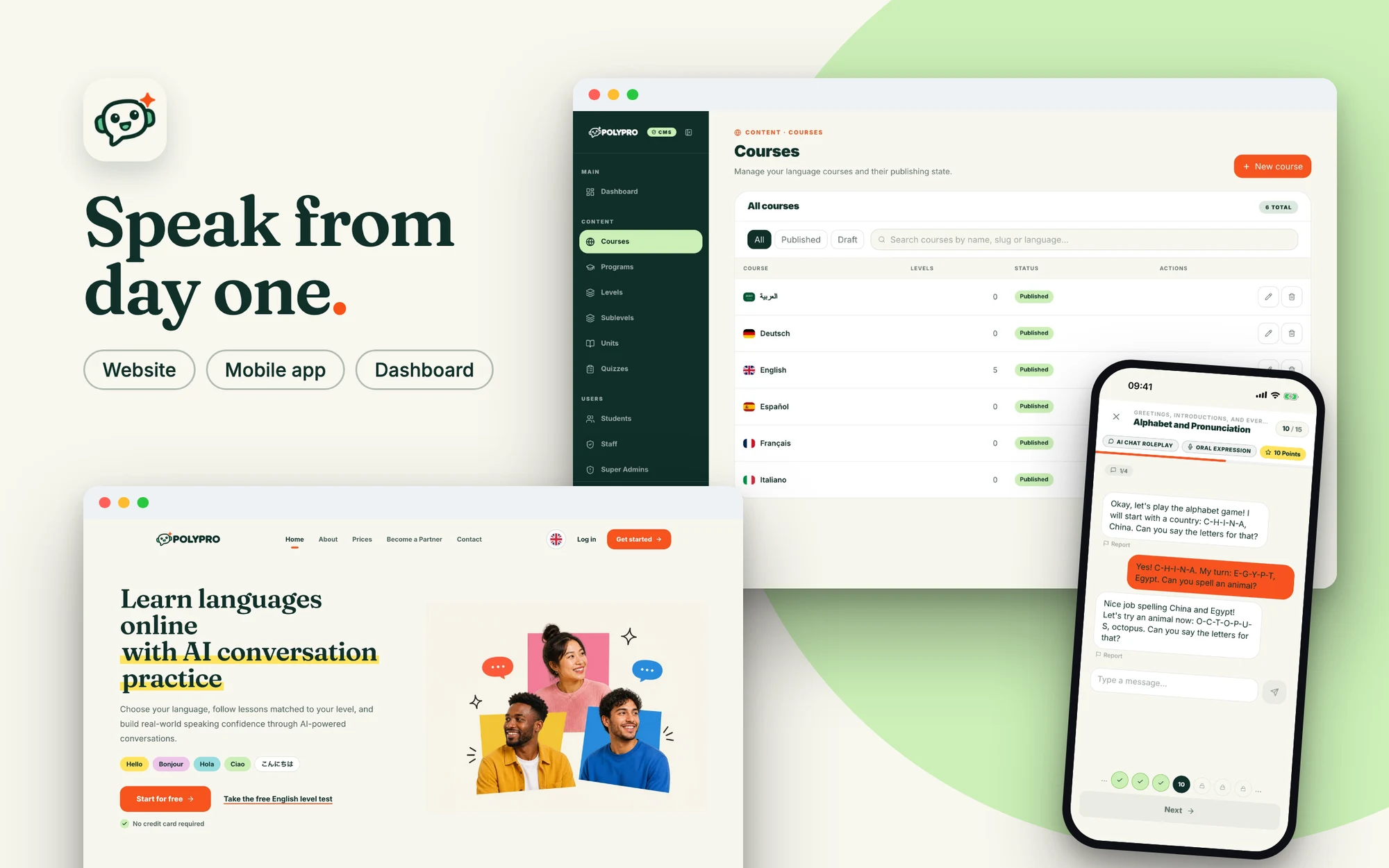
Language learning · Client project
Polypro
Polypro is an online language school where adults practise speaking with an AI tutor, on the web, iPhone, iPad and Android, with portals for companies and a back-office for the team. I led the mobile app and in-app billing.
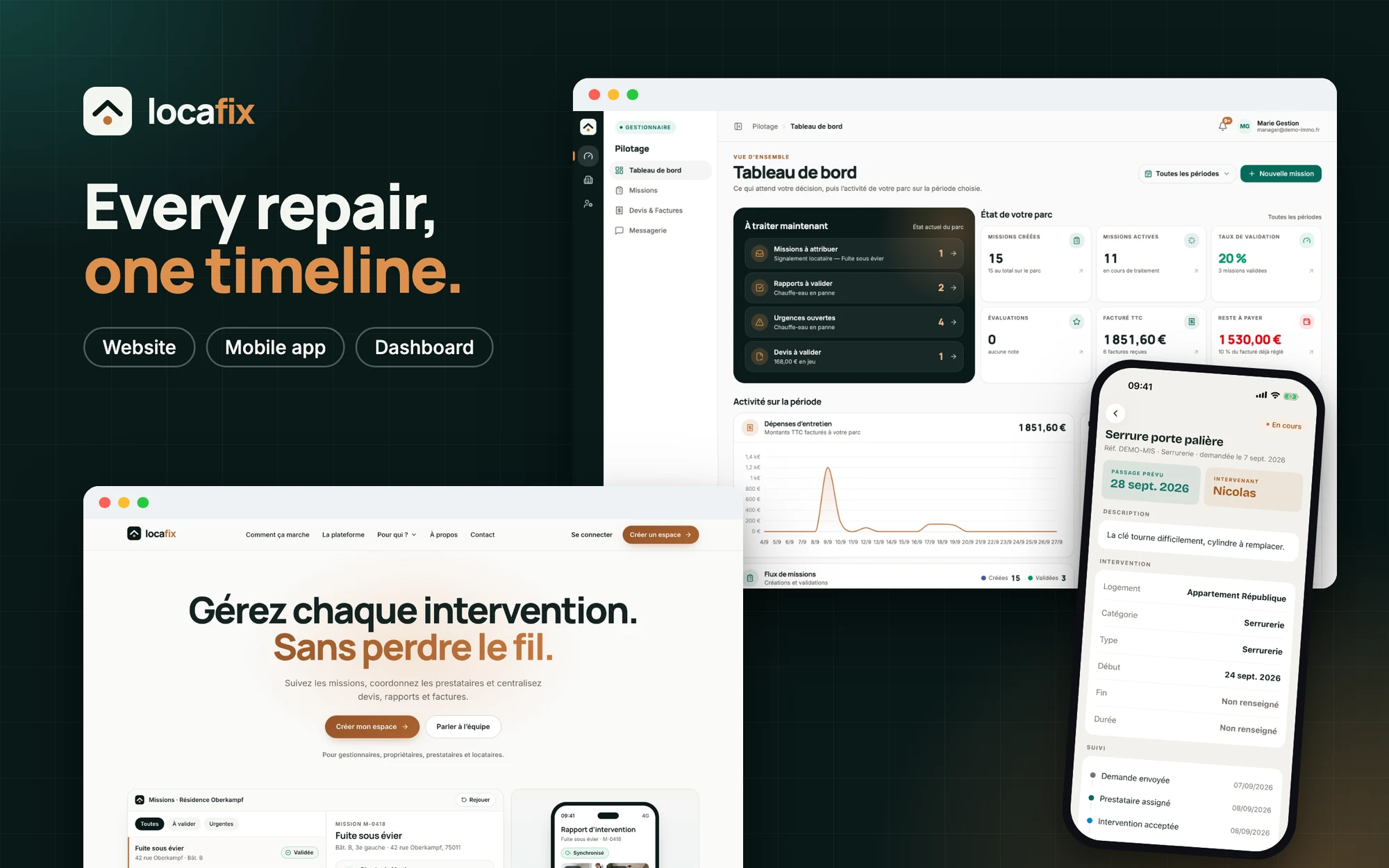
Property maintenance · Client project
Locafix
Property managers handle repairs by phone, email and spreadsheets, and nobody knows where a job stands. I built Locafix end to end, from the website to the mobile app: one shared timeline for managers, tradespeople, tenants and owners, from the first report to the signed-off job.