A website that teaches before it sells
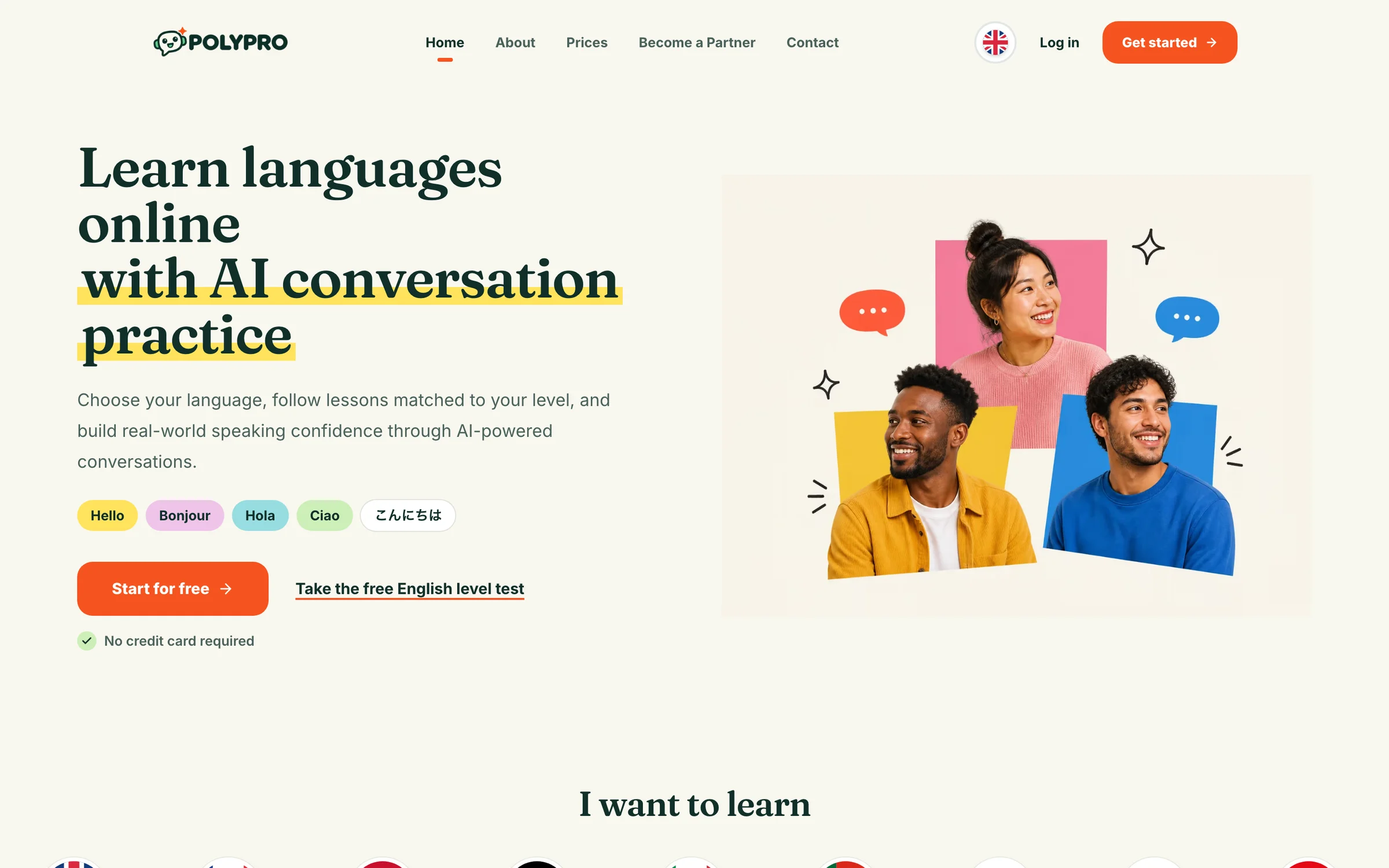
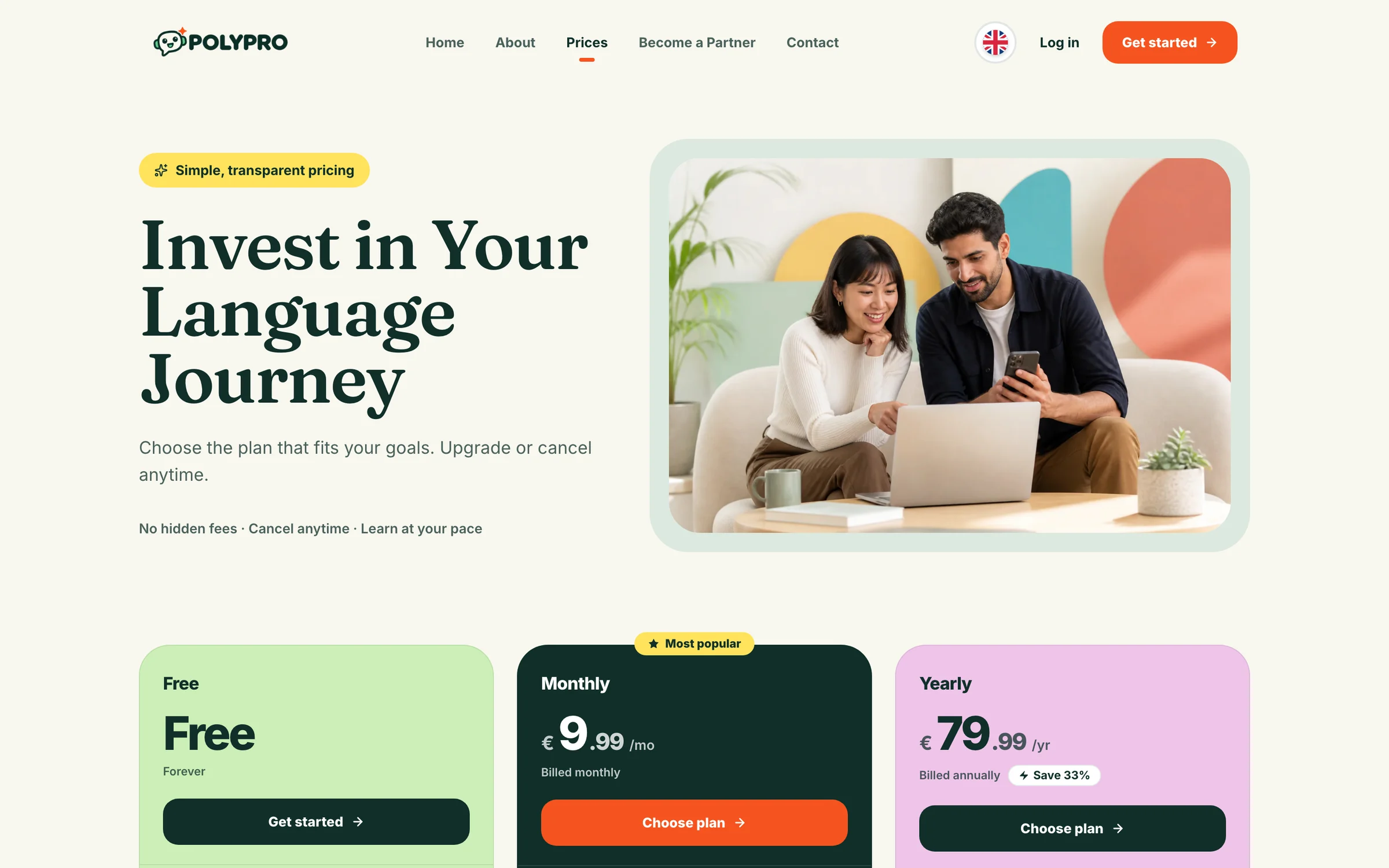
Visitors see the offer, compare plans and sign up. Their account then opens the same courses on the web and in the app, in English, French or Arabic.
02 / Language learning · Client project
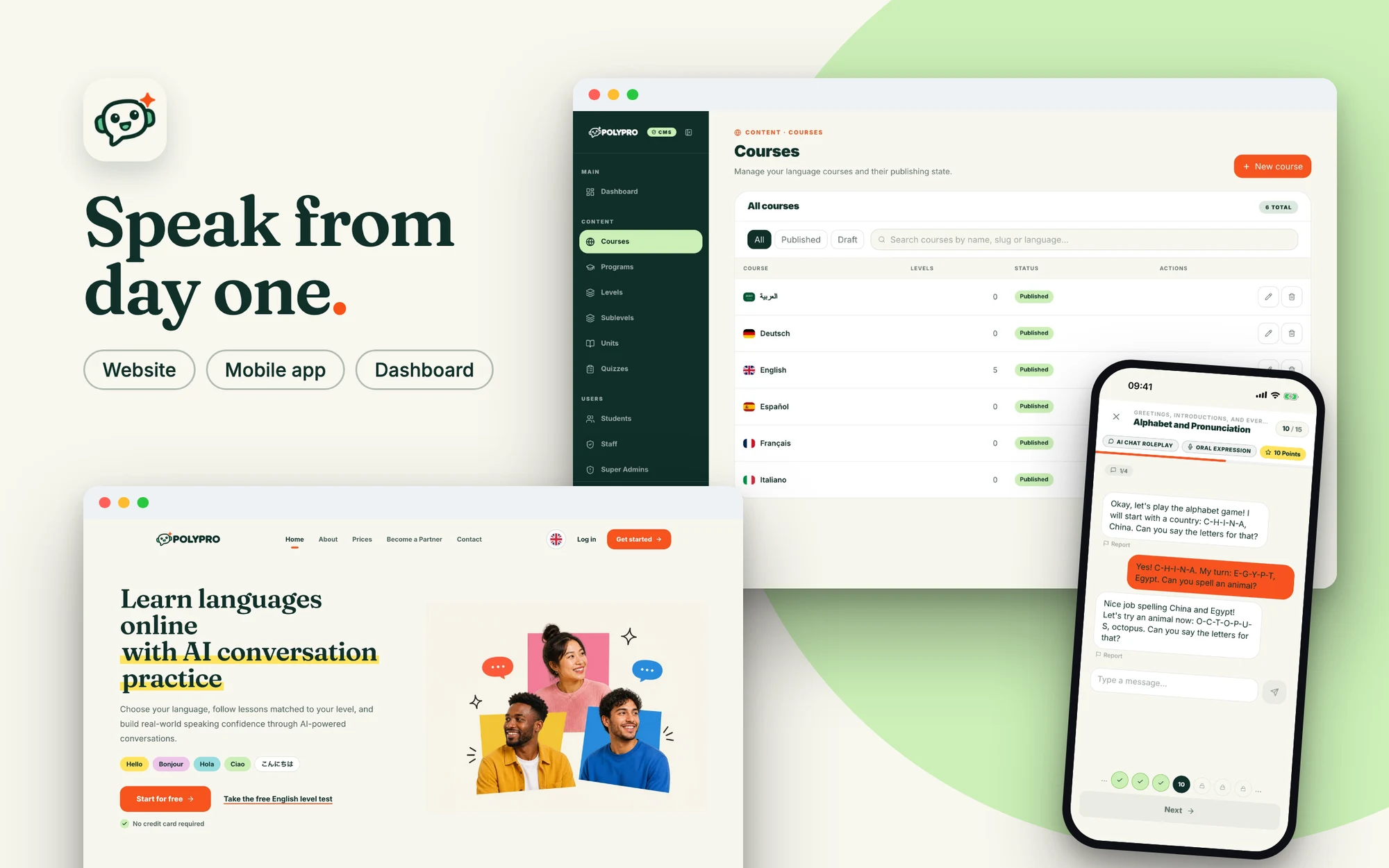
Learners need to speak to make progress, and a human tutor isn't always there. Polypro puts an AI speaking partner in their pocket, inside a real course.
01 / The context
The client wanted a serious language course for adults and professionals, not a game. Learners take a test that sets their level, then follow a structured path from beginner to advanced, and must pass a quiz before moving on.
Speaking is where most learners get stuck, and practising with a human tutor costs money and needs a schedule. The idea behind Polypro: let learners practise conversations with an AI, by text or out loud, whenever they have ten minutes.
The business also had to work. Learners pay by subscription, short programs are sold on the side, companies buy seats for their teams, and affiliates earn a commission on the learners they bring.
So Polypro is more than an app. A public website explains the offer, lets visitors take a free level test and sells the plans. Learners study on the web or in the mobile app with the same account. Companies manage their licences and follow their staff in a partner portal, affiliates track their earnings in their own space, and the team runs everything from a back-office: courses, exercises, test questions, plans, coupons and support.
02 / The people
Adult learners
Know their real level, follow a clear path, and practise speaking on their phone between meetings, in their own language for the interface.
Companies
Give their staff access with licence keys and trust that the progress they see is real.
Affiliates
Share Polypro with their audience and see the learners and commission they bring in.
The Polypro team
Build and update courses without a developer, sell on the web, iPhone and Android, and answer learners quickly.
03 / The goal
04 / My part
I was one of two engineers. I started the project, then owned the mobile app and in-app billing end to end, plus grading on the server and live support chat. The other engineer owned the AI provider layer, web payments and most of the web app and admin.
05 / The approach
From spec to foundation
Start from the client's written spec and set up the codebase, the data model and one API that serves the website, the apps and the back-office.
Build the learner's app
Every screen from onboarding to certificates, all exercise types, and the voice tutor, on iPhone, iPad and Android.
One product, 3 languages
Restyle the app on the web's design system, and translate it into English, French and Arabic with a mirrored layout.
Pass store review
In-app purchases, Sign in with Apple, AI consent, reporting AI replies and account deletion: what Apple and Google check.
Progress you can trust
Move grading to the server and replace slow polling with live support replies.
06 / Key features
Visitors see the offer, compare plans and sign up. Their account then opens the same courses on the web and in the app, in English, French or Arabic.
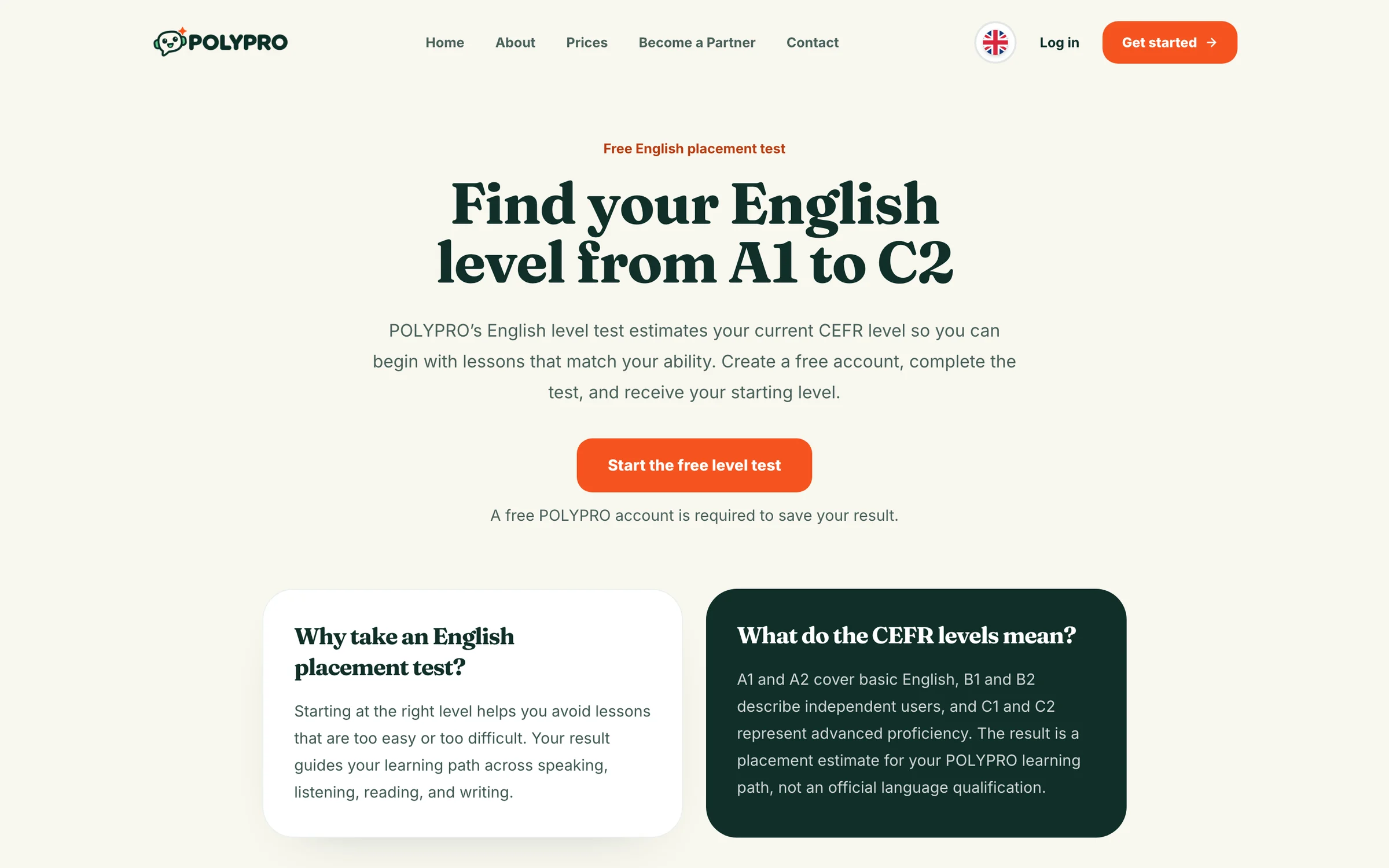
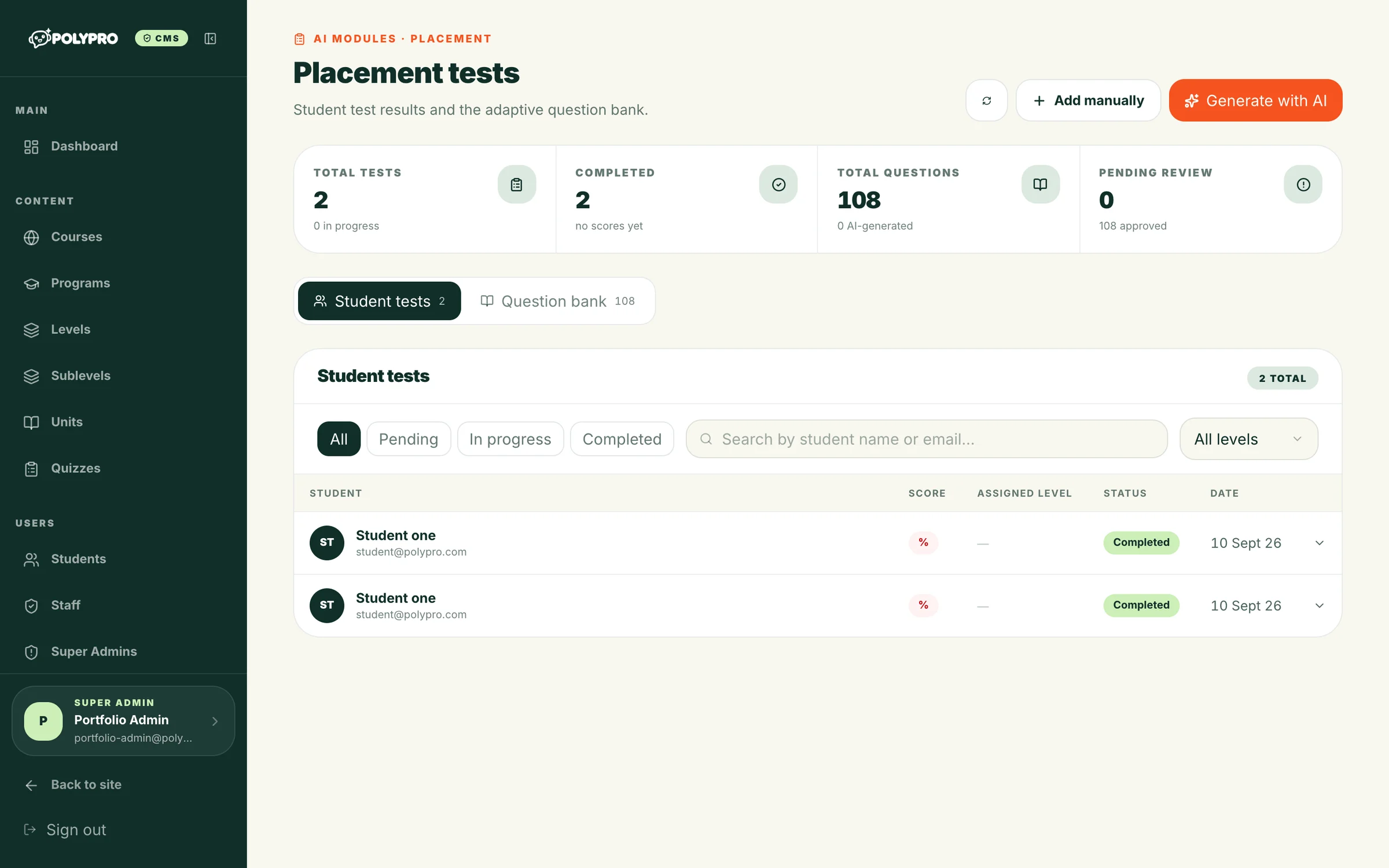
Learners answer written, audio and spoken questions. The test gets harder or easier as they go, then places them on a CEFR level from A1 to C2 and opens the matching path. The team manages the question bank and can draft new questions with AI.
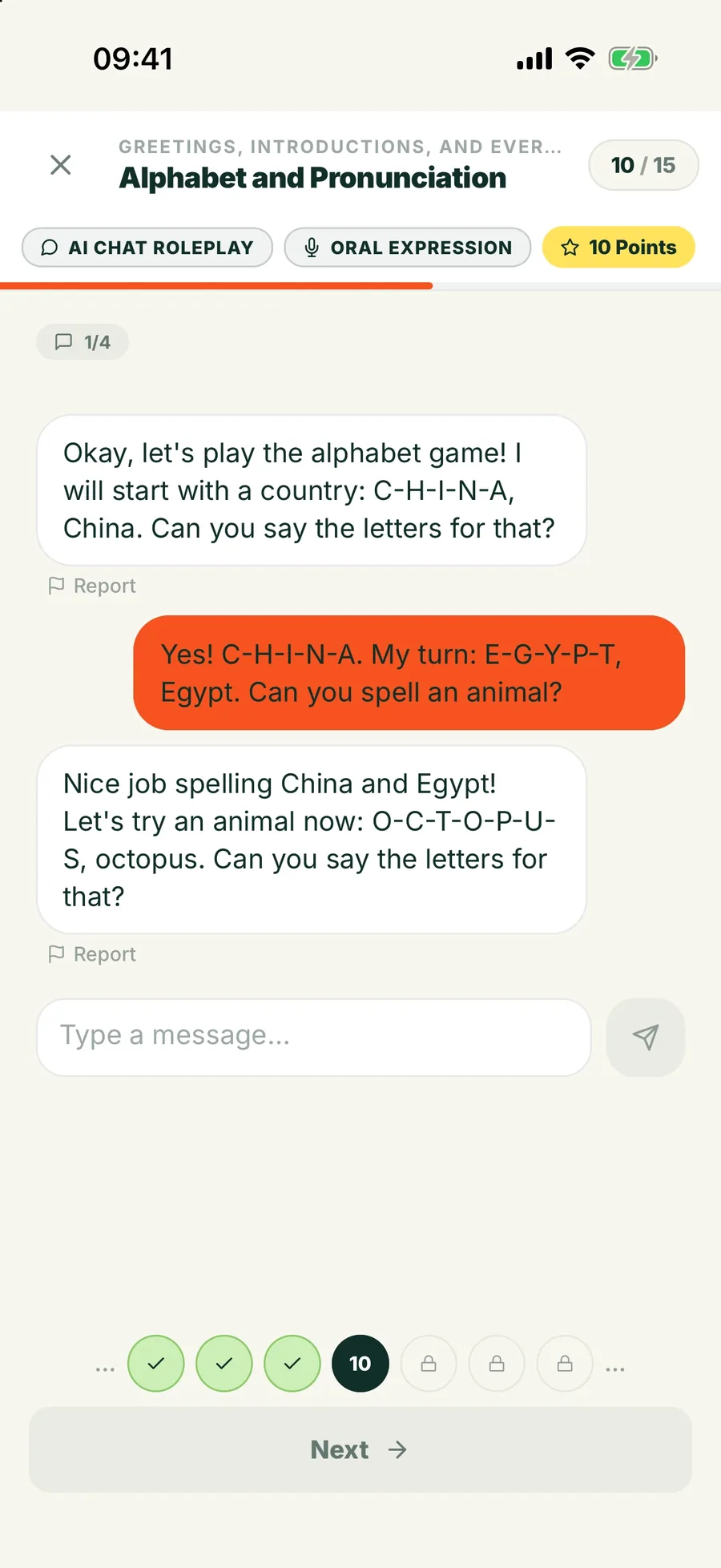
Learners hold a conversation with an AI character, by text or out loud, inside each lesson, and get feedback on their grammar. Every AI reply can be reported in one tap.
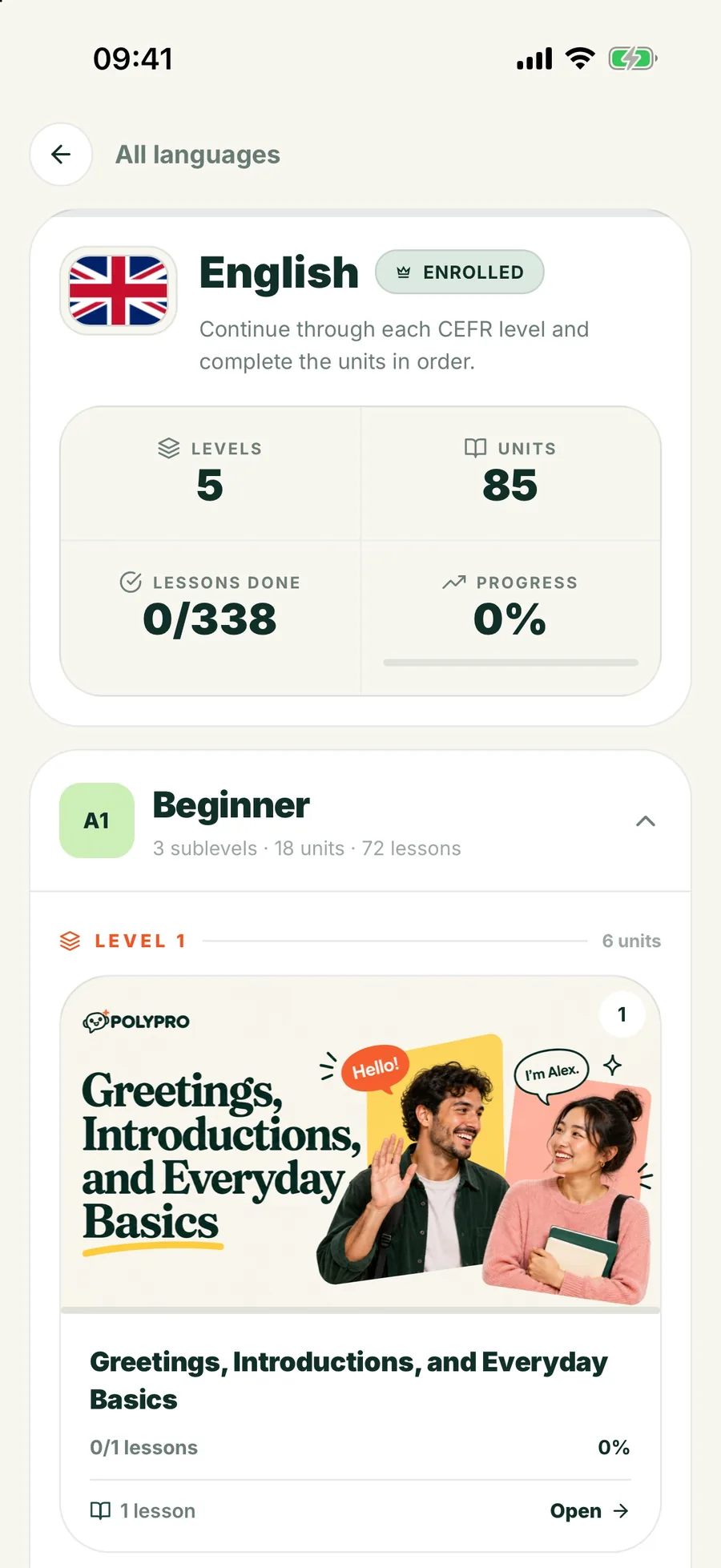
Lessons, units and levels unlock in order. A quiz closes each level: pass it and the next one opens, miss it and the learner gets the units to review.
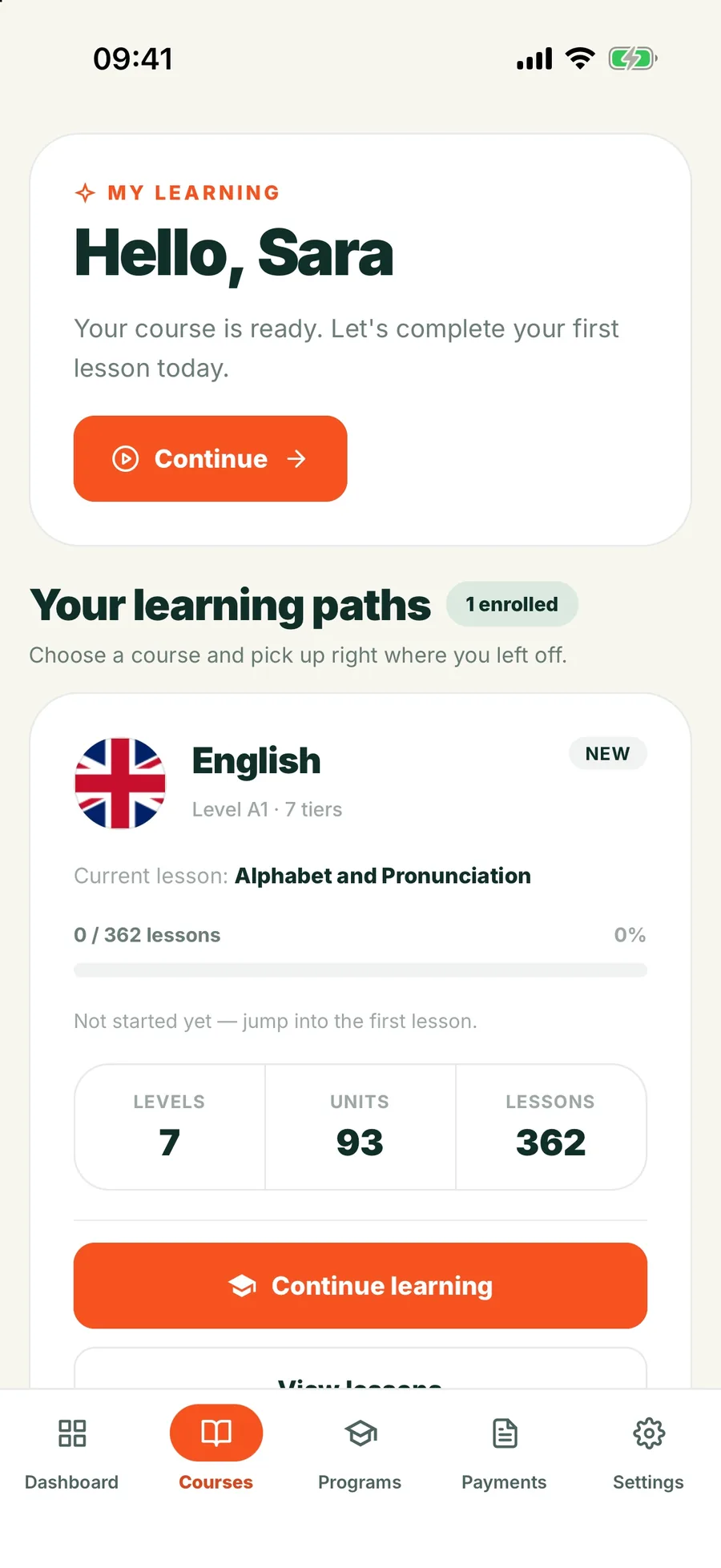
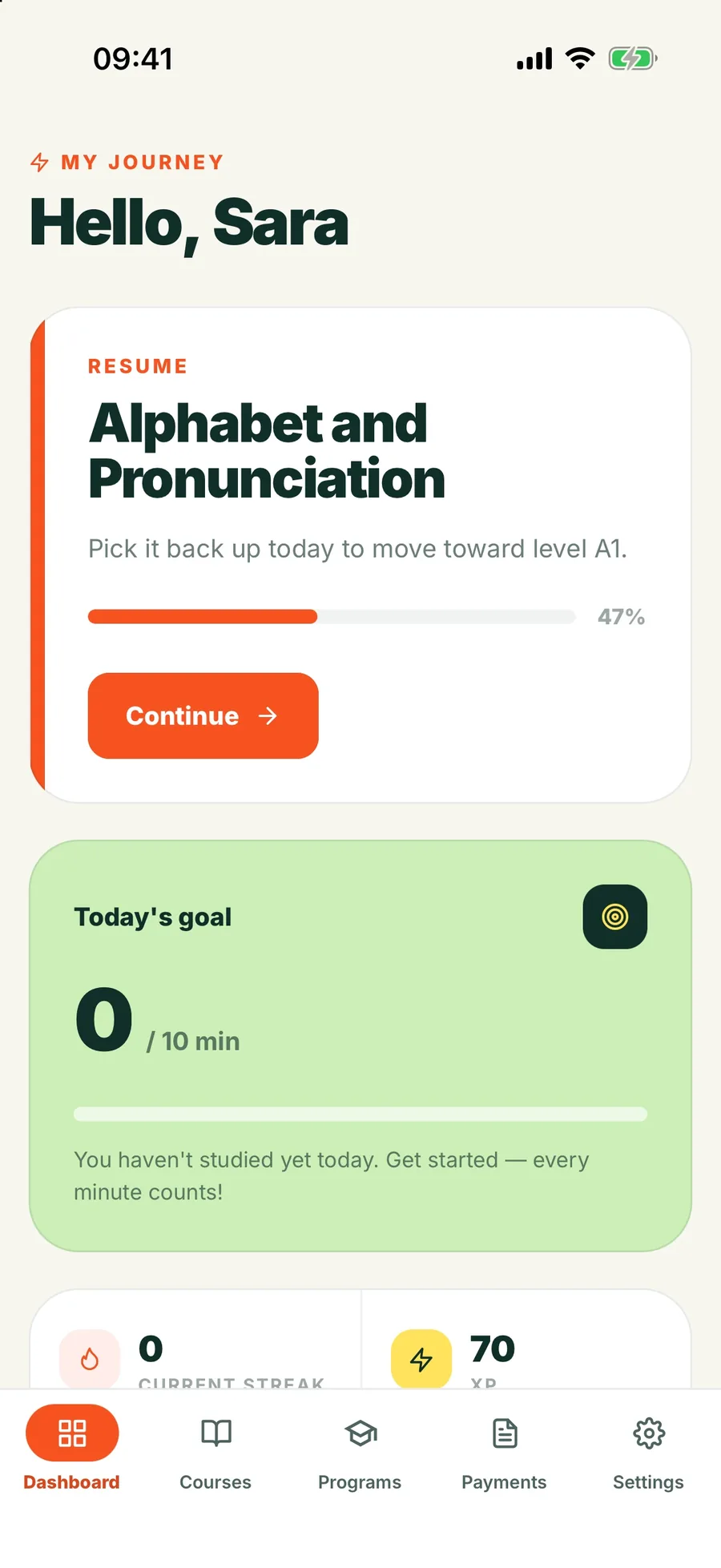
Daily goals, streaks, XP, achievements and certificates, laid out for iPhone and iPad from the same account.
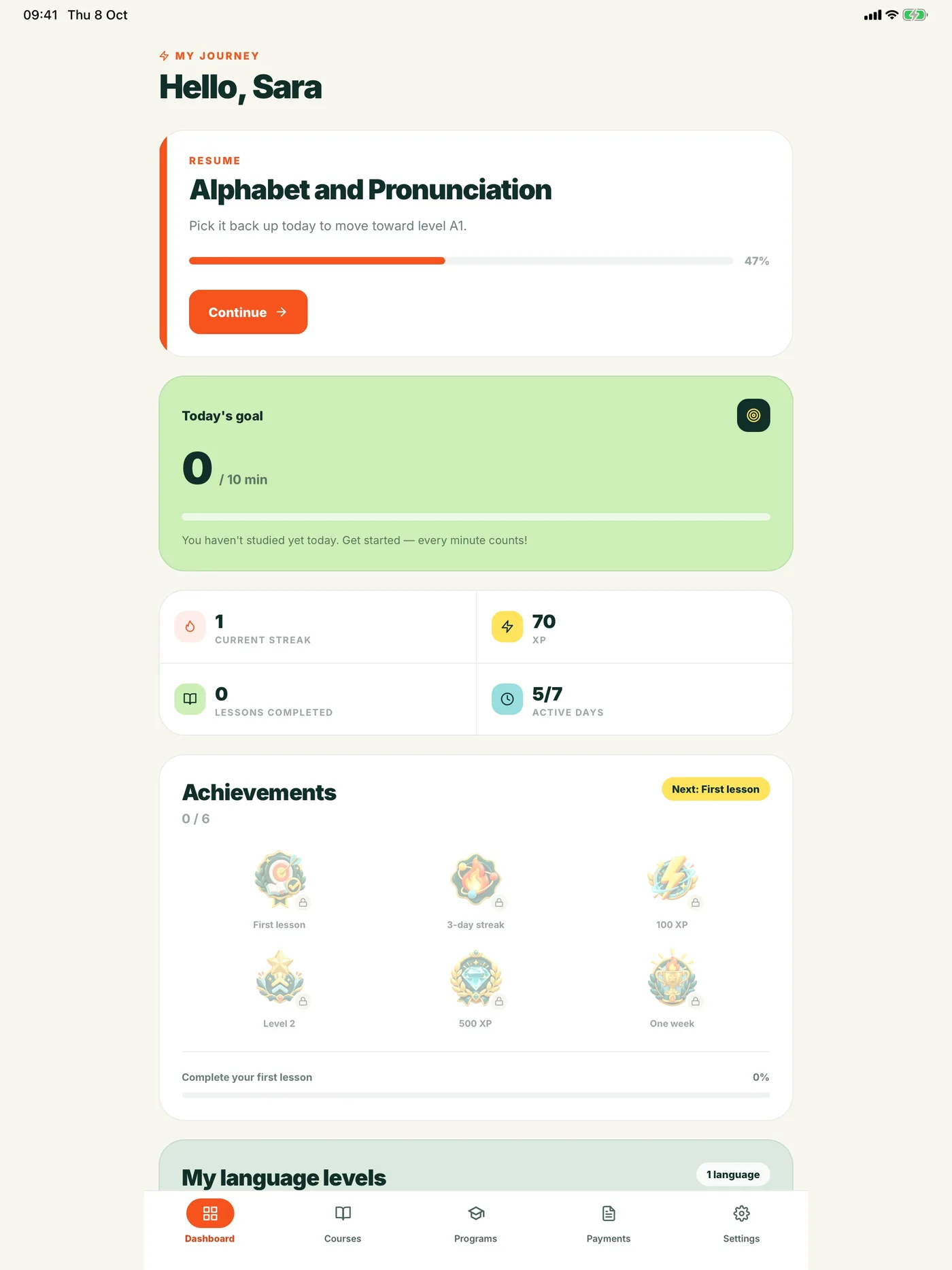
Short standalone courses, bought on their own or included with a plan or a company licence.
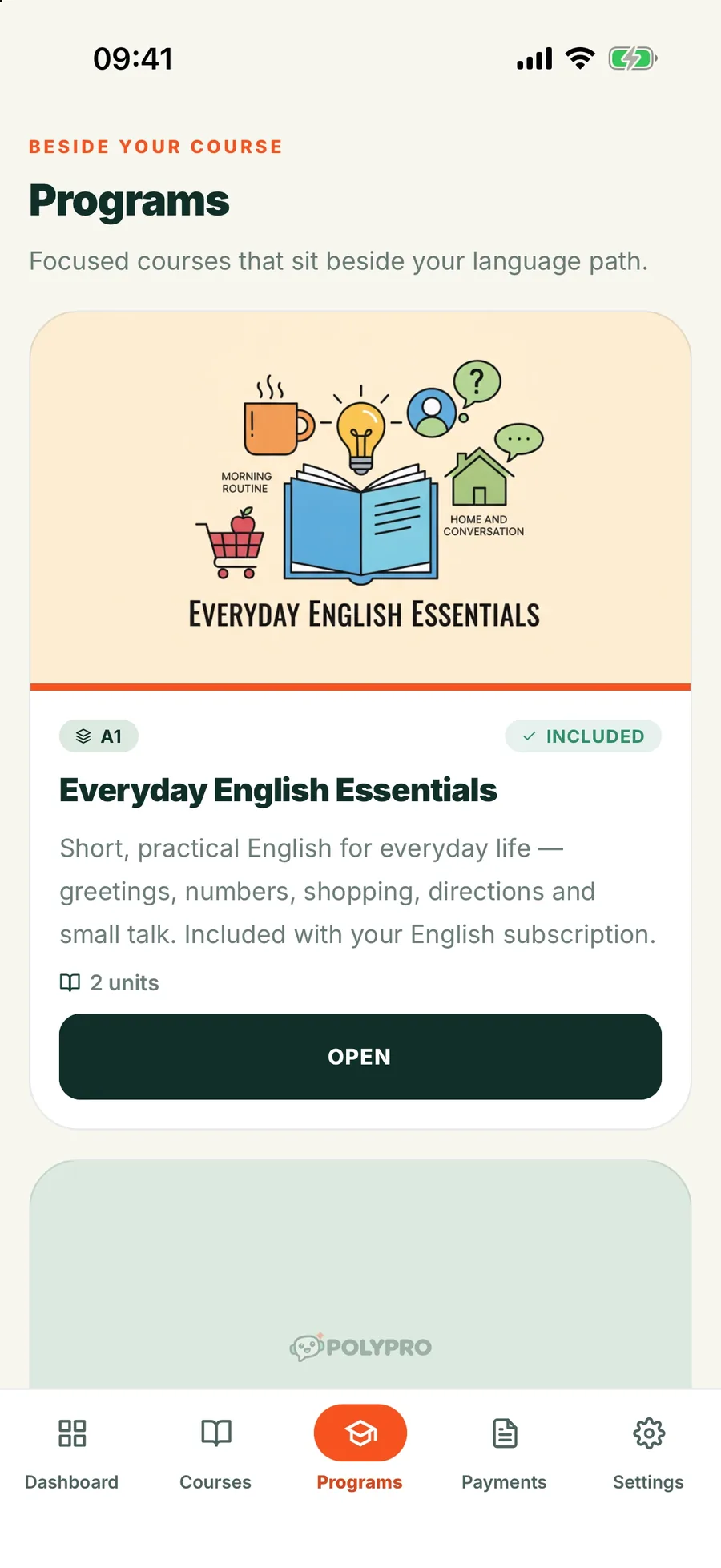
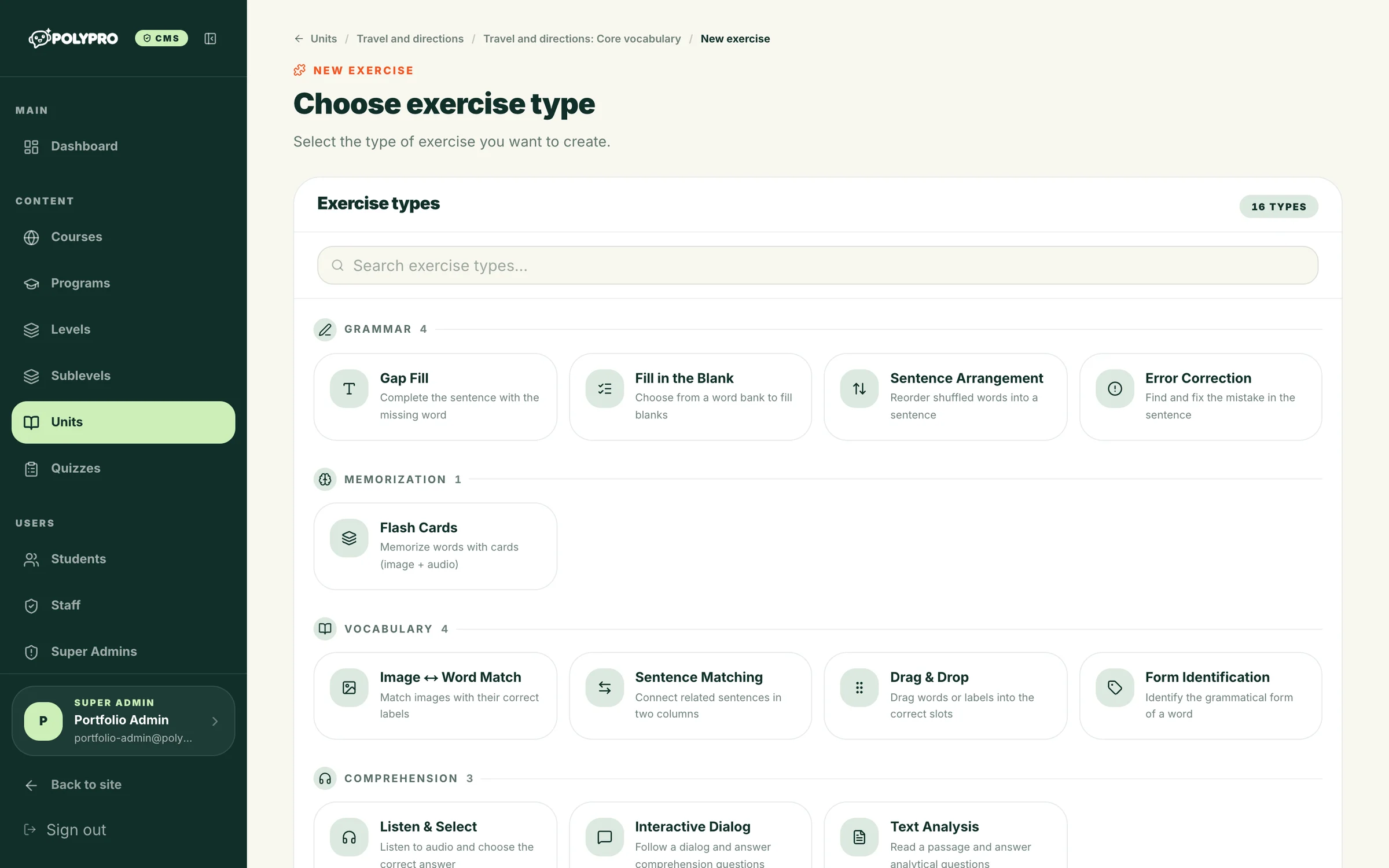
The team builds every course in every language, level, unit and lesson from the back-office, and picks from 16 exercise types, from gap fill to AI roleplay. AI can draft a lesson's exercises for them to review.
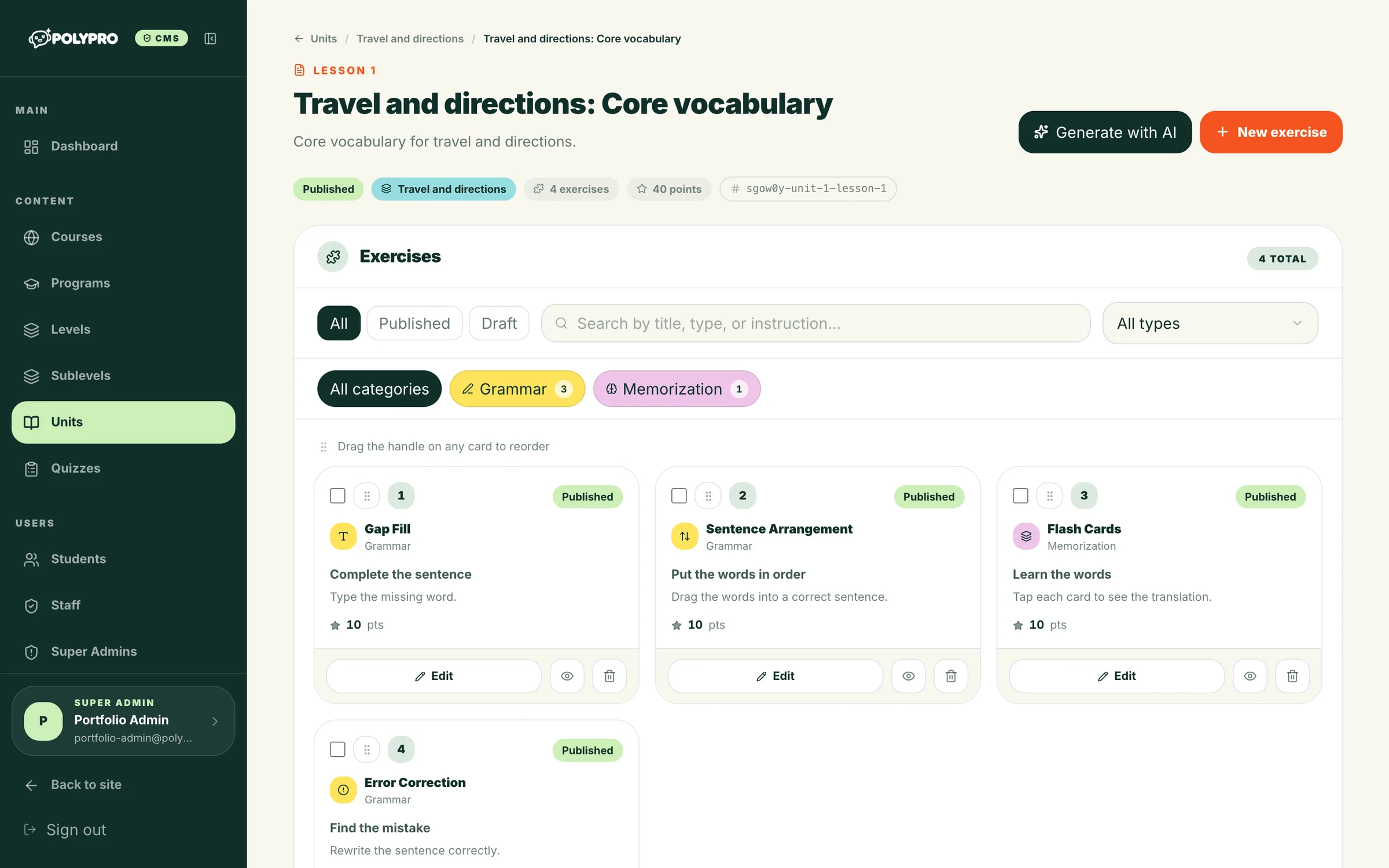
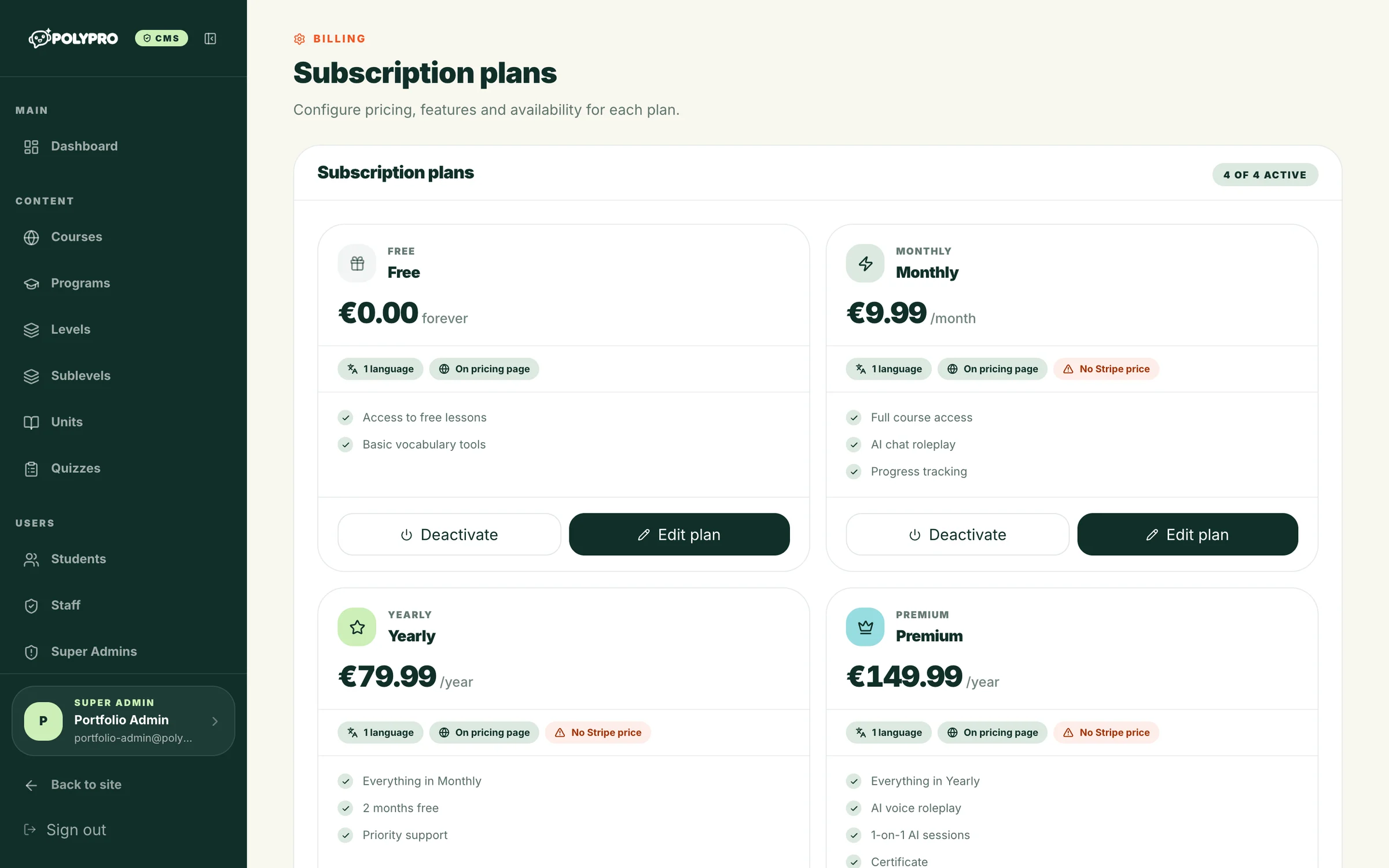
Plans, coupons and app store products are set in the back-office. Learners pay by card on the web, or through Apple and Google in the app, and every purchase unlocks the same access.
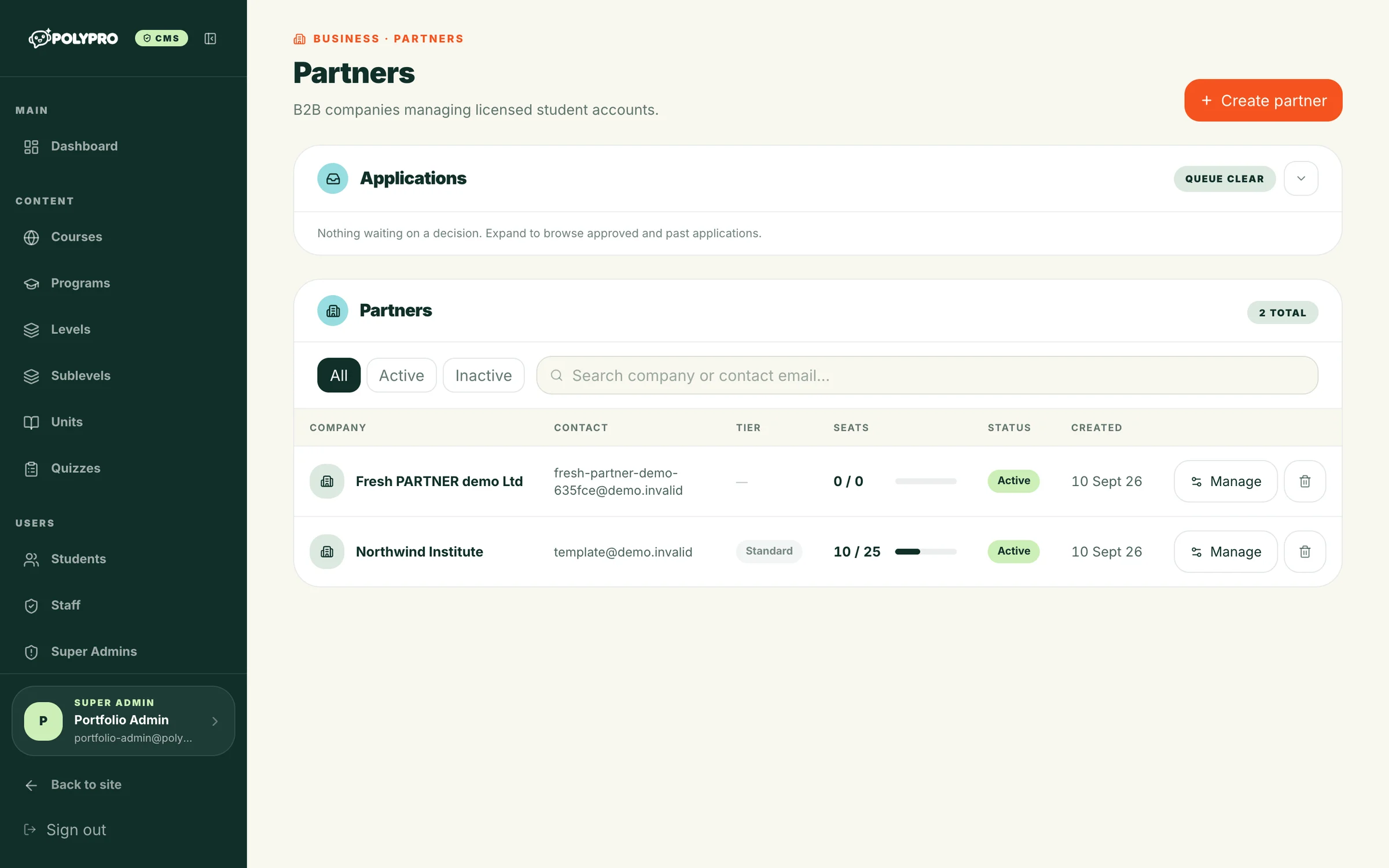
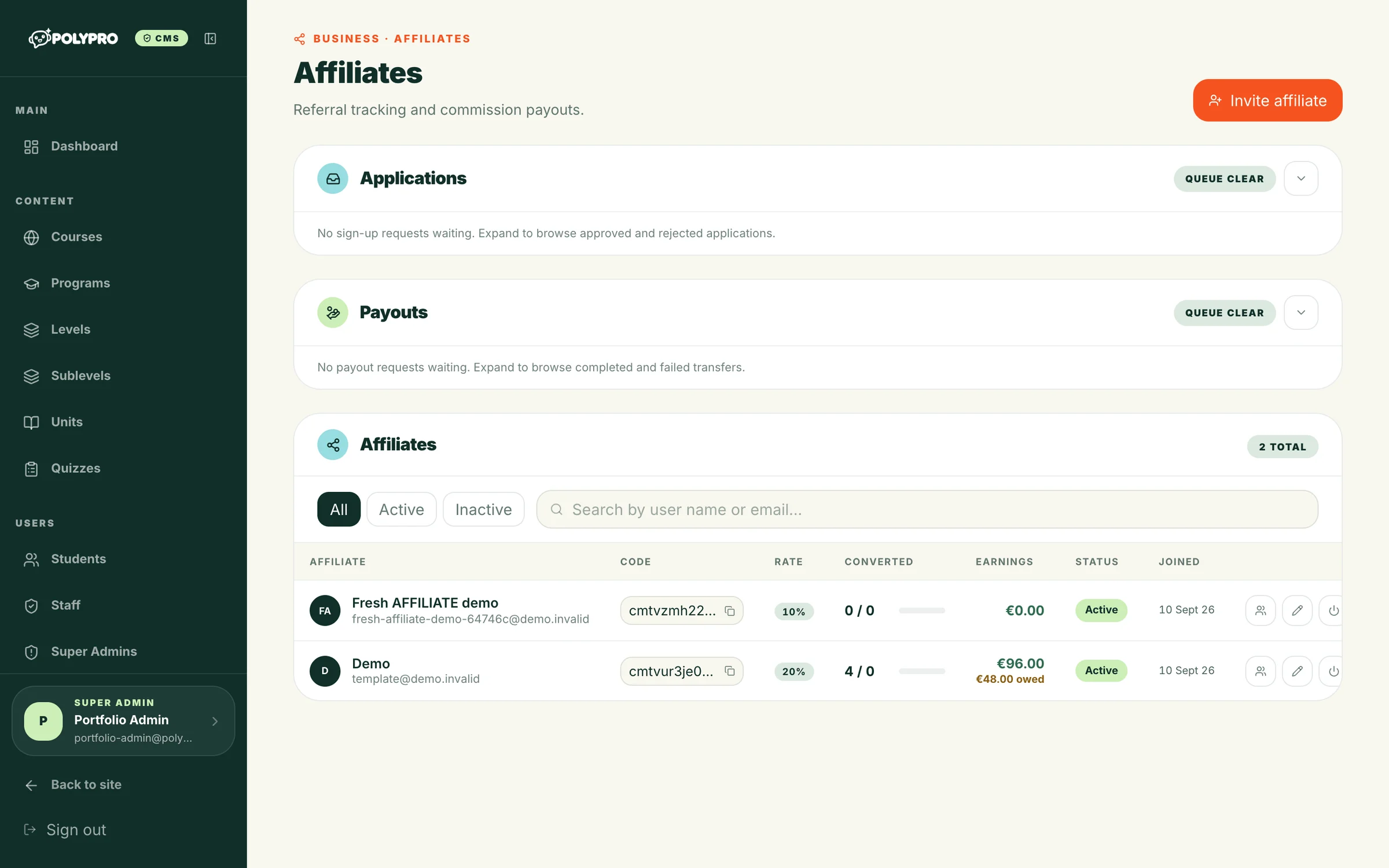
Companies get their own portal to hand out seats with licence keys and follow their staff. Affiliates get tracking links, commission tiers and a view of what they've earned. The team approves both from the back-office.
07 / Key decisions
The challenge
Reading and vocabulary are easy to practise alone. Speaking isn't, and it's what learners need most.
What I did
I built the voice tutor in the app: the learner speaks, the app turns it into text, the AI answers in character, and the answer is spoken back. It keeps working when a phone call or another app takes over the microphone mid-lesson.
Around it I built all 16 exercise types, from drag and drop to listening, and added the last one myself: a video that pauses at key moments and asks the learner a question.
What it changed
Learners can hold a real conversation in the language whenever they have a few minutes, inside the same course that tracks their level.
The challenge
Apple and Google require their own payment systems for digital content, so the app couldn't sell anything the way the website did.
What I did
I built Apple and Google billing into the app: a subscription per language and one-time program purchases, each one confirmed by the server before anything unlocks.
What it changed
The client can sell subscriptions and programs on iPhone and Android, and one account unlocks the same courses on the web, the phone and the iPad.
The challenge
Certificates and company licences only matter if progress is real, so results can't depend on what the app says about itself.
What I did
I moved grading to the server: it checks each answer and records the progress itself, on every platform.
What it changed
A level reached on Polypro is a level earned, which is what companies paying for seats need to see.
08 / The result
For learners
A course that places them at their level and lets them practise speaking out loud, on any device, in English, French or Arabic.
For companies
A partner portal to hand out seats with licence keys and follow their staff, with progress graded by the server so results can be trusted.
For the client
A live website and App Store app that sell subscriptions and programs, plus a back-office to build courses and run the business.
For the team
Support replies arrive live in every app, and the code ships with automated tests on the server and the mobile app.
Built with
How I work
Built with an AI-agent workflow I designed: Claude Code as a pair programmer, with every change shipped through a reviewed pull request.
Case studies
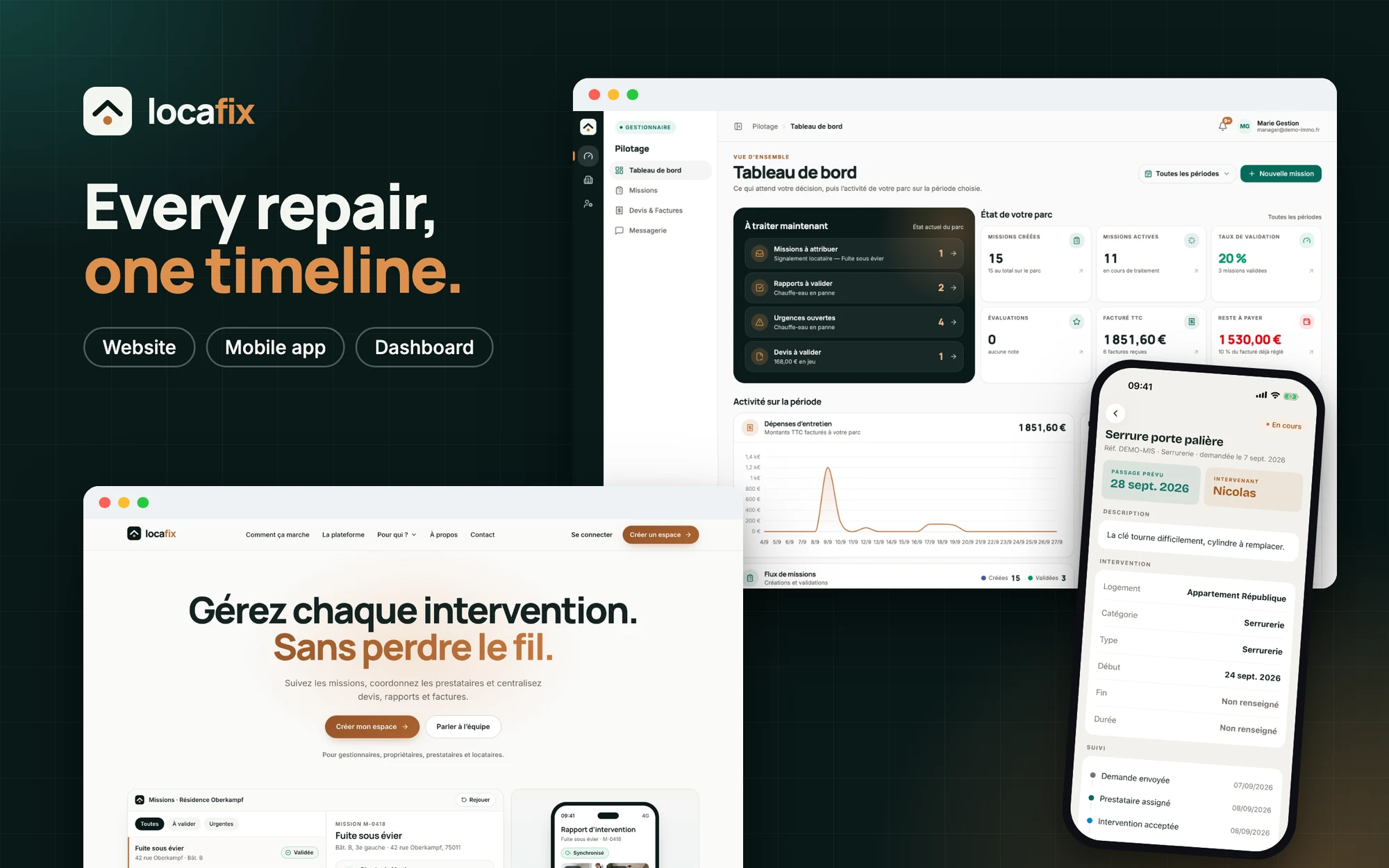
Property maintenance · Client project
Locafix
Property managers handle repairs by phone, email and spreadsheets, and nobody knows where a job stands. I built Locafix end to end, from the website to the mobile app: one shared timeline for managers, tradespeople, tenants and owners, from the first report to the signed-off job.
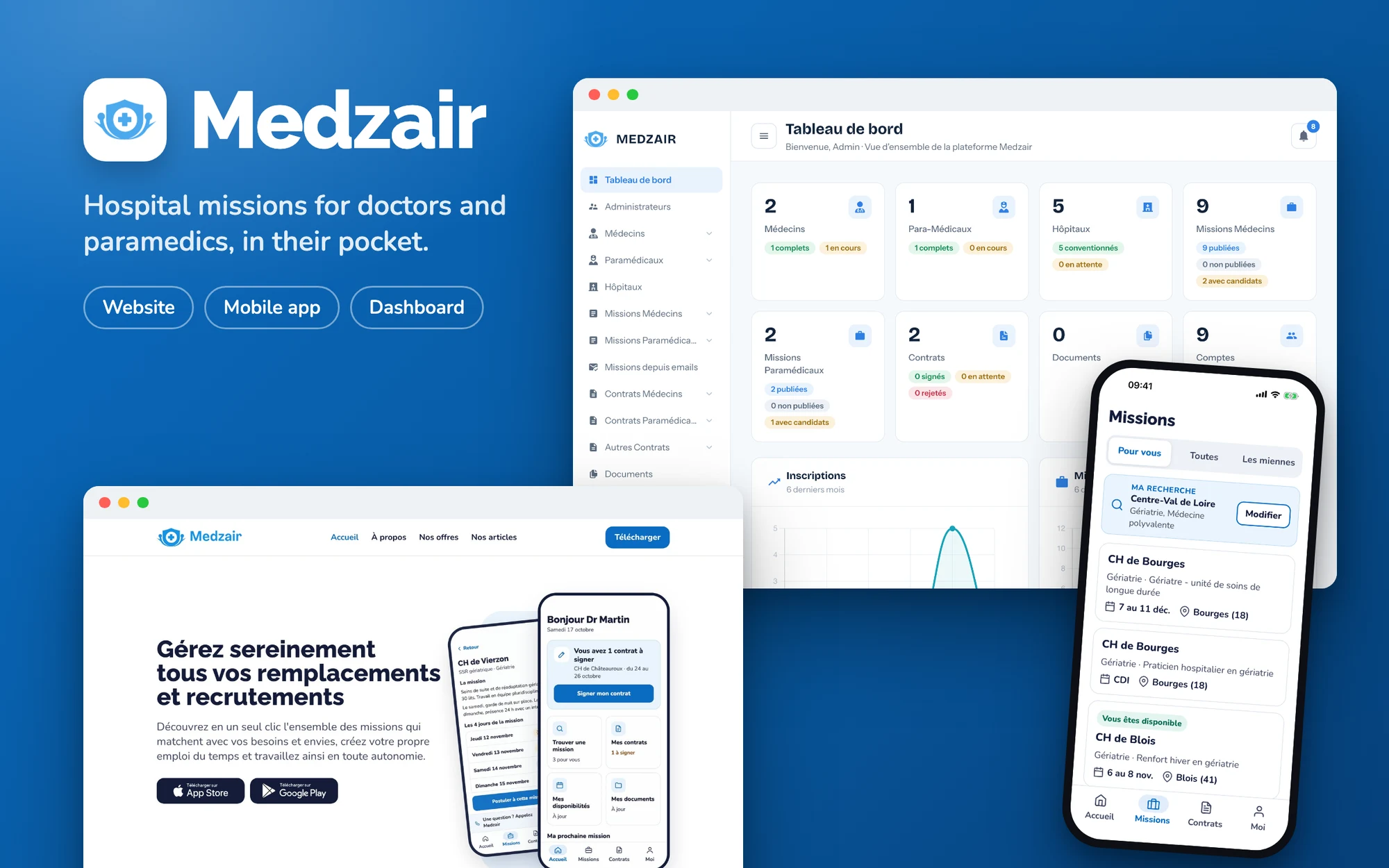
Healthcare staffing · France
Medzair
French hospitals need doctors at short notice, and filling each shift meant emails, phone calls and paperwork. I designed and built Medzair to take that work off everyone's plate, from the hospital's request to the signed contract.